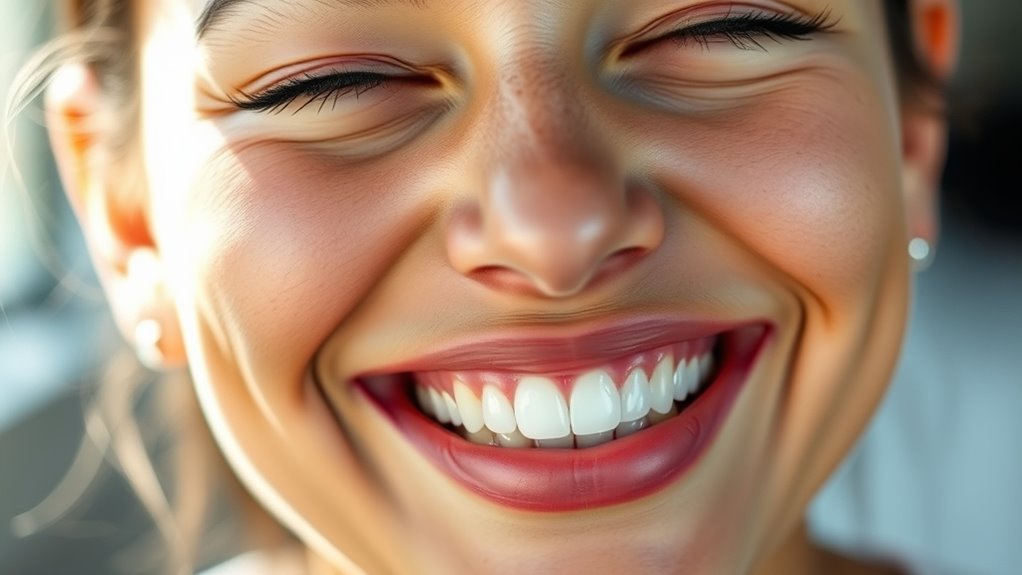

Your smile plays a powerful role in shaping first impressions before you even speak. A genuine, confident grin signals warmth, friendliness, and trustworthiness, making others more likely to see you as approachable and likable. On the other hand, forced or awkward smiles can seem insincere or uneasy. Understanding how facial cues influence social perceptions helps you make a positive impact right from the start. Keep exploring to discover how mastering your smile can boost your social confidence.

Get gifts for the two of you delivered free — and shop member deals
- Fast, free delivery on millions of items
- Access to Prime Big Deal Days deals on October 6–7
- Prime Video, Amazon Music and more included
Key Takeaways
- Genuine smiles that reach the eyes signal warmth, friendliness, and increase trustworthiness in first impressions.
- Forced or awkward smiles may appear insincere, negatively impacting social perceptions and approachability.
- Facial expressions quickly convey emotional states, influencing how others perceive personality traits.
- Smiles serve as powerful nonverbal cues that can open social opportunities and foster connections.
- Recognizing and displaying authentic smiles enhances likability and positively shapes initial social encounters.

Have you ever wondered what science can reveal about your smile? It turns out, your grin isn’t just a simple gesture; it’s a powerful tool that influences how others perceive you. When you smile, your facial expressions do more than convey happiness—they shape social perception in meaningful ways. People tend to interpret your facial expressions quickly, often forming first impressions within seconds. A genuine smile, one that reaches your eyes, signals warmth and friendliness, making you seem approachable and trustworthy. On the other hand, a forced or awkward smile can send mixed signals, potentially making you appear insincere or uneasy. Your smile acts as a social signal, influencing the way others judge your personality and intentions.
Your smile is a powerful social signal that shapes perceptions of warmth, trustworthiness, and approachability.
Research shows that facial expressions like smiling are vital in social interactions because they serve as nonverbal cues. These cues help others understand your emotional state without you having to say a word. When you flash a confident, genuine smile, you’re more likely to be perceived as open and likable. This perception can open doors to new relationships, professional opportunities, or even everyday interactions. Conversely, if your facial expressions seem tense or neutral during social encounters, people might interpret that as disinterest or aloofness. Your facial expressions, especially your smile, set the tone for how you’re perceived from the moment someone sees your face.
The science behind this also explains why smiling can influence social perception so powerfully. Your smile acts as an immediate social cue that signals your emotional state, helping others decide whether to approach or avoid you. People subconsciously associate genuine smiles with positive traits like kindness, confidence, and warmth. This perception can influence social outcomes, from forming friendships to making a good first impression during an interview or date. The way your facial expressions are perceived can even affect how others interpret your intentions and trustworthiness, shaping long-term relationships and social dynamics.
In essence, your smile isn’t just a reflection of how you feel; it’s a social tool that communicates volumes about your personality and emotional state. By understanding the science behind facial expressions and social perception, you can become more aware of how your smile influences others. A genuine, confident smile can work wonders in creating positive first impressions, helping you connect more effectively with those around you. So, next time you smile, remember—it’s not just about showing your teeth; it’s about shaping perceptions and building social bridges.
Frequently Asked Questions
How Does Cultural Background Influence Smile Perception?
Your cultural background shapes how you interpret smiles through cultural smile cues and cross-cultural expressions. You might see a broad grin as friendly in one culture but overly informal in another. These cues influence your perception, making you respond differently based on your cultural norms. Understanding these differences helps you appreciate diverse ways people express happiness, ensuring your own smile aligns with cross-cultural expressions and fosters positive first impressions worldwide.
Can a Smile Be Improved With Cosmetic Dentistry?
Did you know that 74% of people think a smile enhances attractiveness? Yes, cosmetic dentistry can definitely improve your smile. You can achieve a brighter look with teeth whitening and refine your gum line through gum contouring. These treatments boost confidence and create a more harmonious appearance. By investing in cosmetic dentistry, you’re actively enhancing your smile’s appeal, making a positive first impression every time you flash that confident grin.
Does Smiling Actually Boost Confidence Over Time?
Yes, smiling can boost your confidence over time. When you smile, you engage facial muscles that promote positive feelings and self-esteem building. These muscles send signals to your brain, helping you feel more relaxed and confident in social situations. Consistently smiling trains your mind to associate happiness with your expression, gradually improving your self-esteem and making you feel more comfortable sharing your genuine smile in everyday interactions.
Are There Psychological Factors That Affect How We Smile?
Did you know that psychological factors considerably influence how you smile? Your emotional state, social context, and even subconscious cues affect which facial muscles activate during a smile. When you’re happy or trying to hide discomfort, your facial muscles respond accordingly, impacting your emotional expression. These factors shape not just your smile’s appearance but also how others perceive your confidence and friendliness, making your emotional expression a powerful social tool.
How Does Age Impact the Way We Perceive Smiles?
As you age, your perception of smiles changes due to age-related changes and evolving social norms. Younger people tend to view youthful expressions as more genuine and attractive, while older individuals might focus on warmth and sincerity. You might notice that a genuine smile feels more inviting regardless of age, but cultural influences also shape how you interpret different expressions. Ultimately, your perception adapts with your own aging experience and social context.
Conclusion
When you flash a genuine smile, you activate a cascade of positive impressions, almost like lighting up a room with warmth. It’s not just about showing teeth; it’s about sending a message of friendliness and confidence. Imagine your smile as a key, opening trust and approachability in seconds. So, next time you meet someone new, remember—your grin isn’t just a gesture, it’s a powerful tool that shapes how others see you from the very first moment.
Fall Picks
fall essentials
As an affiliate, we earn on qualifying purchases.