Using standing desks and supportive chairs in your couple workspace helps improve comfort, boost productivity, and promote better health. You can switch between sitting and standing, which reduces physical strain and encourages better posture during long work hours. Comfortable, adjustable furniture keeps both of you focused and minimizes tension or discomfort. Investing in ergonomic furniture creates a healthier environment and supports long-term well-being. Keep exploring to discover how the right setup can transform your shared workspace even more.

Get gifts for the two of you delivered free with Prime
- Fast, free delivery on millions of items
- Prime Video, Amazon Music and more included
- Member-only deals all year
Key Takeaways
- Adjustable standing desks promote health by reducing sedentary time and encouraging movement for both partners.
- Supportive chairs improve posture, prevent back pain, and enhance comfort during long work sessions.
- Ergonomic furniture minimizes physical strain, increasing focus and productivity for couples working together.
- Sharing ergonomic setups fosters harmony, reduces tension, and supports a healthier, collaborative workspace.
- Investing in quality furniture boosts overall well-being, work efficiency, and long-term health for both partners.
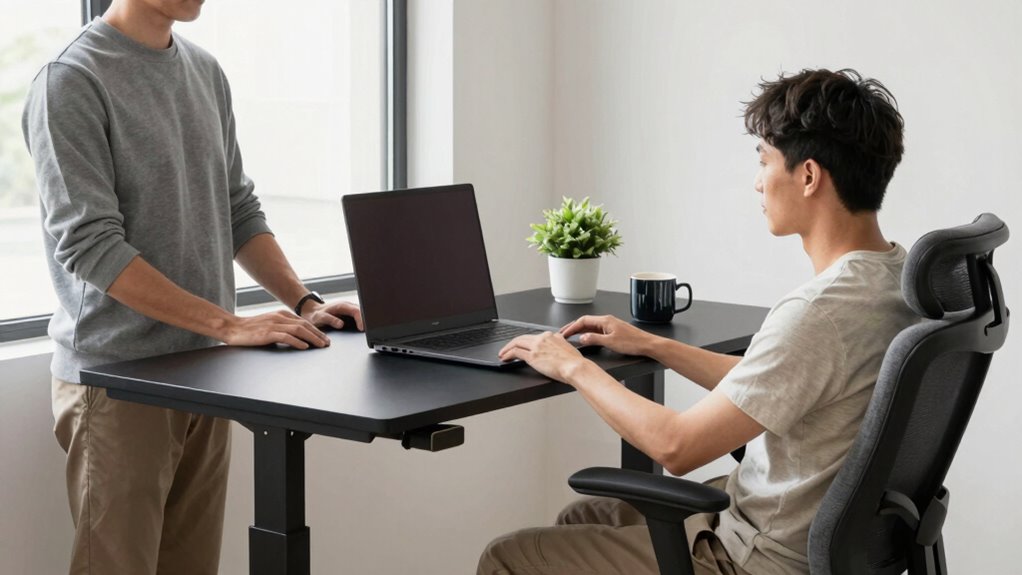
In today’s remote work era, couples sharing a workspace often overlook the importance of ergonomic furniture, yet investing in standing desks and better chairs can markedly boost comfort and productivity. When you prioritize ergonomics, you’re not just making a small upgrade—you’re creating a healthier, more efficient environment. Ergonomic benefits go beyond mere comfort; they reduce strain on your body, help prevent common issues like back pain and neck tension, and promote better posture. For couples working side by side, this means fewer distractions caused by discomfort and more focus on your tasks.
A standing desk allows you to switch between sitting and standing throughout the day, which is crucial for maintaining good health and reducing fatigue. When you stand, you engage your core muscles, improve circulation, and decrease the likelihood of developing musculoskeletal problems. For couples sharing a workspace, a height-adjustable standing desk offers flexibility, so both partners can find their ideal working height without compromising comfort. This adaptability not only enhances ergonomic benefits but also signals a shared commitment to health, fostering a more positive workspace dynamic.
Better chairs play a similarly vital role. Investing in chairs with ergonomic support—such as adjustable height, lumbar support, and breathable fabric—makes a noticeable difference in your daily productivity. When your chair properly supports your lower back and encourages good posture, you’re less likely to experience discomfort that distracts you from work. This is especially important in a shared space, where both partners need to be able to settle into a position that minimizes strain and maximizes focus. A supportive chair can also help prevent long-term health issues associated with poor seating choices.
Productivity boosts are directly tied to ergonomic setups. When you’re comfortable, you can concentrate longer and work more efficiently. Discomfort and pain are major interruptions, pulling your attention away from your tasks and causing frustration. Ergonomic furniture reduces these interruptions, allowing you to maintain momentum throughout your workday. Plus, shared ergonomic furniture minimizes tension and disagreements over uncomfortable seating, fostering a more harmonious environment. Incorporating ergonomic furniture into your workspace is essential for supporting both your health and your productivity in a shared setting.
Ultimately, investing in ergonomic furniture isn’t just about personal comfort; it’s about creating a workspace where both partners can thrive. By choosing standing desks and supportive chairs, you’re making a strategic move towards better health, enhanced productivity, and a more positive shared work experience. When you prioritize ergonomics, you build a workspace that supports your well-being and your work goals, making every day more comfortable and productive for both of you.
Popular right now

KitchenAid Artisan 5-Quart Tilt-Head Stand Mixer, White

KitchenAid 3-Piece Pasta Roller and Cutter Set for Stand Mixers

KitchenAid Artisan Series 5-Quart Tilt-Head Stand Mixer, Juniper (KSM150PS)
As an affiliate, we earn on qualifying purchases.
Frequently Asked Questions
How Do Standing Desks Affect Long-Term Joint Health?
Standing desks positively impact your long-term joint health by promoting better posture alignment and enhancing joint flexibility. When you use a standing desk, you reduce the strain on your joints caused by prolonged sitting, helping prevent stiffness and discomfort. Regularly switching between sitting and standing encourages movement, which supports joint health and flexibility over time. This dynamic approach helps you maintain comfort, reduce injury risk, and improve overall joint wellness.
What Are the Best Chair Features for Shared Workspaces?
Think of your chair as the sturdy ship that keeps your workspace sailing smoothly. You want ergonomic cushions to cradle your back and adjustable armrests to keep your arms at a perfect angle. Look for breathable fabric to keep you cool and adjustable height options for comfort. A chair with these features guarantees your shared space feels like a well-oiled machine, where both of you can focus and thrive together.
Can Ergonomic Furniture Improve Productivity for Couples?
Yes, ergonomic furniture can boost your productivity as a couple. By incorporating ergonomic accessories and customizing your workspace, you reduce discomfort and encourage better posture. When you both feel comfortable, you’re more likely to stay focused and work efficiently. Personalizing your workspace with adjustable chairs and standing desks helps accommodate your individual needs, making collaborative work smoother and more enjoyable. Ultimately, ergonomic furniture enhances comfort, leading to improved productivity for both of you.
How Often Should Couples Alternate Between Sitting and Standing?
You should alternate between sitting and standing every 30 to 60 minutes to maintain ergonomic posture and prevent discomfort. This practice promotes workspace flexibility, helping you avoid strain and fatigue. Pay attention to how your body feels and adjust your schedule as needed. Regular changes encourage better circulation and focus, making your workspace more comfortable and efficient. Remember, consistency is key to maximizing the benefits of ergonomic furniture.
Are There Specific Designs That Promote Collaboration?
Think of workspace designs as a dance floor where collaboration flows smoothly. Opt for open layouts with modular furniture that encourages interaction, while sleek design aesthetics keep the space inviting. Incorporate privacy solutions like glass partitions or movable screens, allowing moments of focus without breaking the rhythm. These specific designs foster a harmonious environment, making teamwork seamless and inspiring, much like a well-choreographed dance among partners.
Conclusion
Incorporating standing desks and ergonomic chairs into your shared workspace isn’t just a comfort upgrade; it boosts productivity and reduces health risks. Did you know that standing desks can increase focus and energy levels by up to 15%? By making these simple changes, you create a healthier, more collaborative environment where both of you can thrive. Prioritize your comfort—your work life, and your relationship, will thank you.