

Two relationship books dominate recommendations more than almost any others: Attached by Amir Levine and Rachel Heller, and The Seven Principles for Making Marriage Work by John Gottman and Nan Silver. People comparing them are usually not asking which book is “better written” — they are asking which one addresses their actual problem. That distinction matters, because these books are built for different situations and different failures.

Get gifts for the two of you delivered free — and shop member deals
- Fast, free delivery on millions of items
- Access to Prime Big Deal Days deals on October 6–7
- Prime Video, Amazon Music and more included

Attached: The New Science of Adult Attachment and How It Can Help You Find—and Keep—Love
- ✔ Format: Paperback
- ✔ Authors: Amir Levine, Rachel Heller
- ✔ Genre: Psychology / Self-Help / Relationships

Communicate Your Feelings (Without Starting a Fight): What to Say and What Not to Say to Your Partner
- ✔ Format: Kindle Edition / Digital Book
- ✔ Topic: Relationships & Communication
- ✔ Core Focus: Expressing feelings without escalating conflict
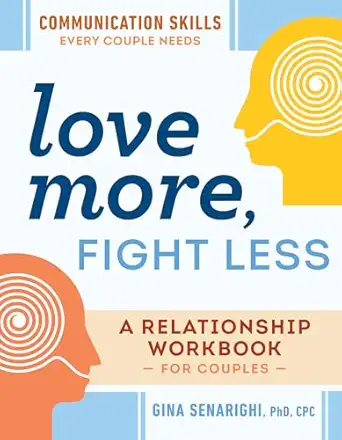
Love More, Fight Less: Communication Skills Every Couple Needs — A Relationship Workbook for Couples
- ✔ Format: Book (Workbook)
- ✔ Topic: Couples communication and relationship skills
- ✔ Core Focus: Building communication skills through guided exercises
Attached is a book about selection and understanding. It explains adult attachment styles — anxious, avoidant, and secure — and argues that much of your relationship distress comes from mismatched attachment systems rather than from a lack of effort or love. Seven Principles is a book about maintenance and repair. It draws on Gottman’s decades of observational research on married couples in his “Love Lab” to identify what stable couples do and what predictably destroys marriages, then turns those findings into exercises a couple can work through together.
The main difference in practice: Attached will change how you interpret your partner’s behavior and help you choose (or recommit to) a compatible partner. Seven Principles will give you and a long-term partner concrete shared exercises to improve communication, manage conflict, and rebuild friendship. If you are single, dating, or in a turbulent early relationship, Attached is almost certainly the right first book. If you are married or cohabiting long-term and want to work on the relationship as a couple, Seven Principles is the better tool. This comparison walks through where each wins, where each falls short, and which one fits your situation.
At a Glance
| Criteria | Attached (Levine & Heller) | The Seven Principles for Making Marriage Work (John Gottman) | Winner |
|---|---|---|---|
| Core approach | Attachment theory framework applied to adult romantic bonds | Observational findings on what stable couples do, turned into practices | Depends |
| Best relationship stage | Dating, early relationships, repeated bad patterns | Marriage and long-term committed cohabitation | A |
| Research foundation | Grounded in decades of attachment research, translated for lay readers | Direct observation of thousands of couples with longitudinal follow-up | B |
| Practical exercises | Diagnostic quizzes and self-tests; fewer structured couple exercises | Extensive — worksheets, questionnaires, shared exercises per chapter | B |
| Use for couples in crisis | Limited — helps explain the dynamic but offers little repair protocol | Strong — designed for couples actively working on the relationship | B |
| Use for dating and partner selection | Excellent — the strongest mainstream book on partner compatibility | Weak — presumes an established couple; little on dating | A |
| Readability and accessibility | Very accessible; clear categories and relatable examples | Accessible but dense; requires sustained joint effort | A |
| Risk of misapplication | Moderate — readers may over-label partners as ‘avoidant’ and exit prematurely | Moderate — exercises can feel clinical if done half-heartedly | Tie |
Attached: The New Science of Adult Attachment and How It Can Help You Find—and Keep—Love
Attached earns our top spot because it does something the other two books in this lineup deliberately avoid: it explains the root cause of relationship friction. Authors Amir Levine and Rachel Heller translate adult attachment theory — the anxious, avoidant, and secure styles — into a framework readers can apply immediately, whether they are dating or twenty years into a marriage. Compared with Communicate Your Feelings, which offers tactical phrasing advice, Attached operates one level deeper, helping you understand why the same argument keeps recurring and why certain partners activate your anxiety while others calm it.The book’s greatest strength is accessibility. Attachment theory originates in academic psychology, but Levine and Heller write for general readers, with self-assessment tools that make the concepts concrete rather than abstract. This pick makes the most sense for anyone who has read generic relationship advice and found it insufficient — the attachment lens gives conflicts a name and a mechanism. It is equally useful for people currently dating, which the two communication-focused books in this roundup are not designed for.The meaningful tradeoff: some readers find the anxious/avoidant categorizations oversimplified. Human attachment is messier than three tidy labels, and a reader who dislikes being sorted into a box may bristle at the framing. Attached also demands more reading investment than a quick phrase guide — it is a book to absorb, not skim. Still, for depth, credibility, and breadth of application, it is the strongest all-around choice here.
Pros:
- Grounds advice in established attachment science rather than anecdote
- Practical framework for identifying your own and your partner’s attachment style
- Accessible language — no psychology background required
- Equally useful for dating and long-term relationships
Cons:
- Anxious/avoidant categories can feel oversimplified to some readers
- Explanatory rather than exercise-based — fewer ready-to-use scripts than the other picks
Best for: Readers who want to understand the psychology behind their relationship patterns, whether single, dating, or in a long-term partnership.
Not ideal for: Couples in an active crisis who need immediate conflict-defusing tactics today, or readers who dislike personality-type categorization.
Bottom line: If you buy one relationship self-help book to understand your patterns rather than just manage symptoms, this is the one.
“If you buy one relationship self-help book to understand your patterns rather than just manage symptoms, this is the one.”
Communicate Your Feelings (Without Starting a Fight): What to Say and What Not to Say to Your Partner
Where Attached explains why couples fight, Communicate Your Feelings (Without Starting a Fight) zooms in on the moment of the fight itself. This is a phrase-level playbook: it lists effective ways to open difficult conversations and, just as usefully, the common conversational mistakes that turn a raised concern into a blowup. Compared with Love More, Fight Less, which asks both partners to complete structured exercises together, this guide can be read and applied by one person alone — you can change how you phrase a complaint tonight without waiting for your partner to pick up a workbook.The digital-first format reinforces the book’s role as a rapid-intervention tool. It is short, scannable, and built around concrete examples rather than theory, which makes it the best entry point in this lineup for someone who does not consider themselves a reader of self-help. This option stands out for its narrow, honest scope: it does not promise to transform your relationship, only to make your hardest conversations go better.The tradeoff is the mirror of that narrowness. There is no deeper psychological framework here — if your conflicts stem from mismatched attachment needs, better phrasing treats the symptom, not the cause. And because the book is brief and tactical, couples with entrenched, long-standing patterns will likely get more from Attached’s diagnostic depth or the workbook format of Love More, Fight Less. Treat it as a first-aid kit, not a treatment plan.
Pros:
- Concrete, actionable advice on phrasing difficult conversations
- Shows what to say and what mistakes to avoid
- Accessible, self-help format that is quick to read and apply
- Usable by one partner alone — no joint participation required
Cons:
- Limited depth — no underlying framework for why conflicts recur
- Brief, tactical scope may not help entrenched relationship patterns
- Digital-first format may not suit readers who prefer print
Best for: Partners who want immediate, practical language for raising difficult topics without triggering an argument.
Not ideal for: Readers seeking a deeper understanding of why conflict patterns exist, or couples wanting a structured joint program.
Bottom line: The fastest path from ‘I’m upset’ to ‘I said it without a fight’ — ideal when you need better words, not a theory course.
“The fastest path from ‘I’m upset’ to ‘I said it without a fight’ — ideal when you need better words, not a theory course.”
Love More, Fight Less: Communication Skills Every Couple Needs — A Relationship Workbook for Couples
Love More, Fight Less is the only pick in this lineup that is built for two people. It is a genuine workbook: exercises, prompts, and guided activities designed to be completed as a couple, with the explicit goal of reducing conflict and deepening emotional connection. Where Attached gives you a lens for understanding your dynamic and Communicate Your Feelings hands you scripts, this book asks for something the others do not — shared effort. That is simultaneously its greatest strength and its central limitation.For the right couple, the exercise-driven format produces something reading alone cannot: real-time practice and accountability. Communication is a skill, and this book treats it like one, building from foundational techniques to harder conversations. Compared with the other two options, it offers the highest ceiling for change, because skills practiced together stick far better than insights read separately. It is suitable at any relationship stage, from newly committed couples building good habits early to long-term partners looking to break old ones.The honest tradeoff: the book only works if both partners participate. If one partner is reluctant, dismissive, or only going through the motions, the exercises can become a new source of tension rather than a fix — a risk neither Attached nor Communicate Your Feelings carries, since both can be read solo. There is also less explanatory depth here; couples who want to understand why they fight may find the workbook prescriptive without attaching theory. Buy it when you are both genuinely willing; skip it if you are currently the only one trying.
Pros:
- Workbook format turns concepts into practiced skills
- Focused, actionable communication techniques
- Suitable for couples at any stage of a relationship
- Builds shared accountability and real-time practice
Cons:
- Effectiveness depends entirely on both partners’ willingness to participate
- Less theoretical depth than Attached for understanding root causes
- Requires sustained commitment — not a quick-fix read
Best for: Couples at any stage who are both willing to actively practice communication skills together.
Not ideal for: Situations where one partner is unwilling to participate — solo readers should choose Attached or the phrase guide instead.
Bottom line: The strongest choice for change — provided both partners show up; otherwise, start with a solo-readable option.
“The strongest choice for change — provided both partners show up; otherwise, start with a solo-readable option.”
As an Amazon Associate we earn from qualifying purchases.
Key Differences
The deepest difference is diagnostic versus prescriptive. Attached gives you a lens: once you understand that an anxious-avoidant pairing creates a self-reinforcing cycle of pursuit and withdrawal, behaviors that seemed irrational (“why do they never text back? why am I so anxious?”) become interpretable. That interpretive shift is genuinely powerful, especially for people stuck in repeating relationship patterns. But Attached offers relatively little in the way of a structured program once you understand the dynamic. Its practical advice leans heavily toward one conclusion: secure partners are more compatible, and some relationships should be reassessed rather than repaired.
Seven Principles is the opposite. It spends little time explaining why you became who you are, and instead hands you a working model of what functional couples actually do: building “love maps,” expressing fondness and admiration, turning toward bids for connection, accepting influence, and solving solvable problems while managing perpetual ones. The exercises require both partners to participate — this is a book you do, not read. That is its strength and its limitation: a motivated couple can measurably improve their interaction patterns, but a single reader with an unwilling partner gets far less from it.
The second major difference is evidence style. Gottman’s claims come from watching real couples argue and tracking who stayed together — his “Four Horsemen” (criticism, contempt, defensiveness, stonewalling) have unusual predictive backing, and contempt as a divorce predictor is one of the most cited findings in relationship science. Attached draws on the attachment research tradition, which is robust, but the book’s pop application is looser: readers often diagnose partners from a distance and weaponize labels. In short, Seven Principles is more rigorous and more actionable for established couples; Attached is more illuminating and more relevant for anyone still choosing a partner.
Detailed Comparison
Core approach and framework (major difference)
Attached organizes everything around three attachment styles and the chemistry between them. It is a theory of why — why you cling, why they retreat, why the same fights repeat. Seven Principles organizes everything around observed behaviors of successful versus failed marriages. It is a theory of what to do. Neither approach is wrong; they operate at different levels. Attached wins for insight-seekers who want self-understanding; Seven Principles wins for pragmatists who want a program. If your problem is “I keep ending up in the same bad relationship,” Attached’s framework is directly on target. If your problem is “we love each other but fight badly,” Seven Principles is on target.
Best relationship stage (Attached (Levine & Heller) wins — major)
This is the clearest split. Attached was effectively written for the dating and early-relationship phase: its quizzes help you identify your own style and your partner’s, and its advice on recognizing secure partners is most useful before deep commitment. Seven Principles assumes a committed, usually married couple — its exercises require two people willing to sit down and fill out worksheets together. A dating reader will find Seven Principles largely premature; a married reader will find Attached incomplete because it stops at diagnosis.
Research foundation and credibility (The Seven Principles for Making Marriage Work (John Gottman) wins — moderate)
Both books rest on serious research, but Gottman’s is more directly derived. His lab observed thousands of couples, coded their conflict conversations, and followed them for years — the claims in Seven Principles map onto that data with unusual transparency. Attached summarizes the attachment research tradition accurately but more loosely; the book’s confident typing of partners into three styles is a simplification of a messier empirical picture. Gottman has drawn criticism for overstating prediction accuracy in some popularizations, but the gap in direct evidentiary grounding still favors Seven Principles. This matters if you want to trust the advice because of where it came from rather than because it sounds right.
Practical exercises and actionability (The Seven Principles for Making Marriage Work (John Gottman) wins — major)
Seven Principles is essentially a workbook wrapped in explanation: love-map questionnaires, fondness exercises, conflict scripts, and soft-startup techniques that couples practice together. Attached offers quizzes for diagnosis but comparatively little structured practice; its most actionable content is guidance on evaluating a partner’s secure versus avoidant signals. For a couple actively trying to improve, this gap is major — Seven Principles gives you something to do this weekend; Attached gives you something to think about. For an individual reader, the gap narrows, since Gottman’s exercises mostly cannot be done alone.
Use for a couple in serious distress (The Seven Principles for Making Marriage Work (John Gottman) wins — moderate)
Here a caveat applies to both: neither book substitutes for couples therapy when a relationship is in genuine crisis, especially where contempt, addiction, or betrayal are present. Still, of the two, Seven Principles is the better crisis-adjacent tool because its conflict chapters directly address destructive patterns and give replacement behaviors. Attached can actually make a distressed couple worse if one partner uses “you’re just avoidant” as a weapon rather than as an invitation to understand the pursue-withdraw cycle. If your relationship is on the line, read Seven Principles first — or read Attached together with explicit intent to understand the cycle, not to assign blame.
Use for dating and partner selection (Attached (Levine & Heller) wins — major)
This is Attached’s home turf and one of the few places where a relationship book genuinely changes decisions. Its checklist of secure-partner behaviors and its warnings about anxious-avoidant traps are concretely useful on a third date, not just in theory. Seven Principles has essentially nothing to offer here — its framework presumes you have already chosen your person. If you are single or in something new, this criterion alone should decide the comparison.
Readability and accessibility (Attached (Levine & Heller) wins — moderate)
Attached is the easier read: short chapters, clear typologies, engaging case studies, and minimal jargon. It can be finished in a few sittings and remembered afterward. Seven Principles is well written but denser and longer, and its value depends on doing the exercises rather than just reading — many couples buy it, read it, and never open the worksheets. If you want a book a reluctant partner will actually finish, Attached has the advantage.
Risk of misapplication (moderate difference)
Both carry a similar, moderate risk. Attached’s risk is diagnostic overreach: labeling a partner “avoidant” after a quiz and treating the label as destiny, sometimes justifying an early exit from a workable relationship. Seven Principles’ risk is going through the exercises mechanically, turning intimacy work into homework that breeds resentment, or misreading Gottman’s predictive findings as a verdict that a marriage is doomed. Neither risk is disqualifying, but readers should apply both books with humility — frameworks are starting points, not court rulings.
Attached (Levine & Heller): Pros and Cons
Pros:
- Best-in-class explanation of attachment styles and repeated relationship patterns
- Directly useful for dating and partner selection, not just established couples
- Highly readable; concepts stick after one pass
- Reframes ‘crazy’ behavior as understandable attachment dynamics, reducing self-blame
- Strong guidance on recognizing secure partners
Cons:
- Thin on structured repair exercises for committed couples
- Three-style typology oversimplifies; styles are spectrums, not boxes
- Readers may weaponize labels like ‘avoidant’ against partners
- Implicit advice leans toward leaving mismatched relationships rather than fixing them
The Seven Principles for Making Marriage Work (John Gottman): Pros and Cons
Pros:
- Concrete, do-it-together exercises with a clear sequence to follow
- Backed by direct observational research with long-term follow-up
- The Four Horsemen framework is highly actionable for defusing conflict
- Distinguishes solvable problems from perpetual ones — a genuinely useful reframe
- Widely recommended by couples therapists as homework
Cons:
- Requires a willing partner; nearly useless to a solo reader
- Not applicable to dating or partner selection
- Denser and longer; many couples never complete the exercises
- Marriage-centric framing can feel off-key for unmarried couples
- Some popularized predictive claims are stronger than the underlying data warrants
Who Should Choose What
Choose Attached (Levine & Heller) if:
- You are single or dating and keep repeating the same painful relationship pattern
- You want to understand why you feel anxious, clingy, or suffocated in relationships
- Your partner would never agree to do couples exercises but might read a book
- You are deciding whether a current early-stage relationship is worth committing to
Choose The Seven Principles for Making Marriage Work (John Gottman) if:
- You are married or in a long-term committed relationship and both partners want to improve it
- Your core problem is how you fight, not whom you chose
- You want structured exercises to work through together, not theory
- A therapist recommended homework between sessions
Skip both if: Your relationship involves abuse, active addiction, untreated mental illness, or serial betrayal — these situations call for professional help, not a self-help book, and book-based exercises can even entrench harm.
Value for Money
Both books are inexpensive paperbacks, so price is nearly irrelevant — the real cost is your time and effort, and they differ there. Attached costs a few evenings of reading and pays back immediately in self-understanding; it is the higher value per hour invested for most individual readers. Seven Principles costs more in effort: it only pays off if both partners actually do the exercises over weeks, but when that effort happens, the payoff for a long-term relationship is larger and more durable than anything Attached offers. If you are buying one book today and your partner will participate, Seven Principles is the better value. If you are buying one book for yourself, Attached is. And many readers will get the most value from buying both in sequence — Attached to understand the dynamic, Seven Principles to fix it.
Final Verdict
These books are not really competitors — they cover different halves of the relationship lifecycle, and the honest answer is to match the book to your stage. If you are dating, single, or trying to understand why your relationships keep failing, choose Attached; its framework for partner selection and self-understanding is unmatched at this price. If you are in a committed long-term relationship and both of you want to improve it, choose The Seven Principles for Making Marriage Work; it is the more evidence-grounded and more actionable of the two, and its exercises are the reason therapists keep assigning it.
The single biggest deciding factor is whether you have a partner willing to do the work with you. If yes, Seven Principles. If no — whether because you are single or because your partner will not participate — Attached. And if your relationship involves contempt, abuse, or betrayal, put both books aside and find a couples therapist; self-help is for maintenance and growth, not rescue.
Frequently Asked Questions
Should I read Attached or Seven Principles first if I’m in a long-term relationship?
Read Seven Principles first if both partners are willing to engage — its exercises produce tangible change faster. Read Attached first if your partner is reluctant, or if the relationship is plagued by pursue-withdraw dynamics you cannot make sense of; understanding the attachment cycle often creates the goodwill needed to attempt Gottman’s exercises afterward.
Can Attached’s attachment labels damage a relationship?
They can if used as diagnoses or weapons. Calling a partner “avoidant” to win an argument is worse than not knowing the term at all. Used correctly — as a description of a pattern both people contribute to — the framework tends to reduce blame. Treat the labels as spectrums and conversation starters, not fixed identities or verdicts.
Is Seven Principles only for married couples?
No. The research base is married couples and the language is marriage-centric, but the principles and exercises work for any committed, long-term cohabiting or exclusive relationship. What it does require is two participants — a single reader gets diagnosis without a partner to practice with, which sharply limits the payoff.
Can these books replace couples therapy?
No. They work well for maintenance, mild-to-moderate conflict, and growth. Where contempt, addiction, infidelity, or abuse are present, books are the wrong tool and can delay needed professional intervention. Many therapists use Seven Principles as homework between sessions — that pairing is often more effective than either alone.
Which book is better if only one partner will read it?
Attached, clearly. It is written for individual understanding and does not depend on joint exercises. Seven Principles can still be informative for a solo reader — the Four Horsemen chapter alone is worth it — but roughly half its value is locked behind doing the worksheets together.
Halloween Picks
halloween
As an affiliate, we earn on qualifying purchases.