

Relationship communication tools come in many forms — workbooks, skill-building guides, and scripts you can use mid-argument — and the right one depends on whether you’re trying to repair ongoing conflict or prevent it before it starts. My top pick, Reconnect: A Marriage Counseling Workbook, stands out for pairing explanations with structured exercises both partners actually complete, which is rare in this category. The Seven Principles for Making Marriage Work is the strongest research-backed option, drawing on decades of observational studies, while Nonviolent Communication offers the deepest framework for anyone whose default conversations turn hostile fast. The main tradeoff: exercise-driven workbooks demand effort from both partners, while reading-focused books are easier to finish but easier to ignore. Keep reading for the full breakdown of what separates these nine tools.

Get gifts for the two of you delivered free — and shop member deals
- Fast, free delivery on millions of items
- Access to Prime Big Deal Days deals on October 6–7
- Prime Video, Amazon Music and more included
Key Takeaways
- Workbooks with structured exercises (Reconnect, Love More, Fight Less) outperformed pure-theory books for behavior change, because communication improves through practice, not reading.
- The Seven Principles for Making Marriage Work is the only pick grounded in long-term observational research, making it the safest choice for couples who want evidence over anecdote.
- Script-based tools like Communicate Your Feelings (Without Starting a Fight) fill a unique gap: they help in the heat of an argument when frameworks are too hard to recall.
- Nonviolent Communication is the deepest skill system in the lineup but demands the most from the reader — better for motivated individuals than reluctant couples.
- Budget picks (Communication Miracles for Couples, 4 Essential Keys) cover the basics adequately but recycle similar advice; paying slightly more gets you noticeably better structure.
| Reconnect: A Marriage Counseling Workbook |  | Best Hands-On Workbook | Format: Paperback workbook | Primary approach: Guided conversations and couples exercises | Intended audience: Committed couples and married partners | VIEW LATEST PRICE | See Our Full Breakdown |
| The Seven Principles for Making Marriage Work |  | Best Overall | Format: Paperback / ebook / audio | Author background: Relationship researcher and clinical psychologist | Core framework: Seven research-derived principles | VIEW LATEST PRICE | See Our Full Breakdown |
| 4 Essential Keys to Effective Communication in Love, Life, Work–Anywhere! |  | Best for Beginners | Format: Paperback / ebook | Core feature: 12-Day Communication Challenge | Number of key frameworks: 4 essential keys | VIEW LATEST PRICE | See Our Full Breakdown |
| Nonviolent Communication: A Language of Life |  | Best for Deep Conflict Patterns | Format: Paperback / ebook / audio | Core framework: Observations, feelings, needs, requests | Primary focus: Compassionate, blame-free communication | VIEW LATEST PRICE | See Our Full Breakdown |
| Effective Communication for a Healthy Relationship: Scientifically Proven Strategies to Resolve Conflicts and Strengthen Emotional Connection |  | Best Value Pick | Format: Paperback / ebook | Approach: Scientifically referenced strategies | Focus areas: Conflict resolution, emotional connection, misunderstanding prevention | VIEW LATEST PRICE | See Our Full Breakdown |
| Communication Miracles for Couples |  | Best Quick-Fix Format | Format: Paperback | Category: Relationship self-help | Focus: Conflict reduction and connection-building | VIEW LATEST PRICE | See Our Full Breakdown |
| Communication Skills for Couples |  | Best All-in-One Primer | Format: Paperback | Category: Relationship communication guide | Coverage: Communication, conflict, intimacy, marriage strength | VIEW LATEST PRICE | See Our Full Breakdown |
| Communicate Your Feelings (Without Starting a Fight) |  | Best for the Conflict-Averse Partner | Format: Paperback / digital | Category: Emotional communication guide | Focus: Expressing feelings without conflict | VIEW LATEST PRICE | See Our Full Breakdown |
| Love More, Fight Less: Communication Skills Every Couple Needs | 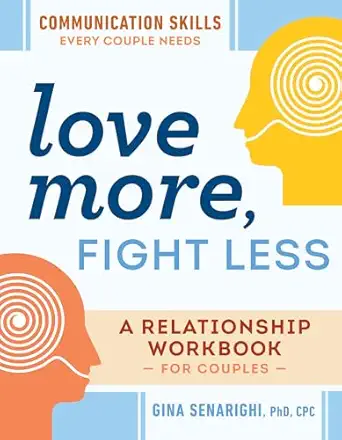 | Best Hands-On Workbook | Format: Paperback workbook | Category: Interactive relationship workbook | Focus: Conflict reduction and connection skills | VIEW LATEST PRICE | See Our Full Breakdown |
| relationship communication tool | Format | Intended audience |
|---|---|---|
| Reconnect: A Marriage Counseli | Paperback workbook | Committed couples and married partners |
| The Seven Principles for Makin | Paperback / ebook / audio | Married and long-term committed couples |
| 4 Essential Keys to Effective | Paperback / ebook | General readers and communication beginners |
| Nonviolent Communication: A La | Paperback / ebook / audio | Individuals and couples, personal and professional |
| Effective Communication for a | Paperback / ebook | Couples in committed relationships |
| Communication Miracles for Cou | Paperback | — |
| Communication Skills for Coupl | Paperback | — |
| Communicate Your Feelings | Paperback / digital | — |
| Love More | Paperback workbook | — |
More Details on Our Top Picks
Reconnect: A Marriage Counseling Workbook
Couples who want to do the work rather than read about it will find their match here. Unlike The Seven Principles for Making Marriage Work, which leans on explanation and theory, this option is built around guided conversations and structured exercises that turn reading time into interaction time. That structure is exactly what stalled couples often need — a prompt that gets both partners talking when they don’t know where to start.
The tradeoff is real, though: a workbook only pays off with mutual commitment. If one partner won’t sit down and fill in pages, the exercises go nowhere, whereas a book like Nonviolent Communication can still benefit a solo reader. Compared with the lighter Communication Miracles for Couples, this one demands more effort but produces more concrete conversation.
Pros:- Exercise-driven format creates actual conversation, not just reading
- Guided prompts help couples who don’t know how to start difficult talks
- Suited to long-term relationship maintenance, not just crisis repair
- Works well as a shared activity between partners
Cons:- Requires sustained commitment from both partners to complete
- Less useful for solo reading or one-sided effort
- Thin on underlying theory compared with research-based titles
Best for: Committed couples who want structured, fill-in exercises and prompts to guide conversations together
Not ideal for: Couples where one partner is reluctant or unwilling to participate in homework-style exercises
- Format:Paperback workbook
- Primary approach:Guided conversations and couples exercises
- Intended audience:Committed couples and married partners
- Structure:Exercise and activity chapters
- Focus areas:Communication, understanding, long-term bonding
- Participation model:Designed for two partners working together
- Best use cadence:Ongoing, session-by-session completion
Our verdict“This is the pick for couples ready to actively work together with pen in hand rather than passively read advice.”
The Seven Principles for Making Marriage Work
This is the anchor of any relationship communication lineup, and it earns the top spot through decades of clinical research behind its seven principles. Where 4 Essential Keys to Effective Communication offers quick, broadly applicable tactics, this book goes deeper into how marriages actually succeed or fail, translating observation into frameworks like enhancing friendship maps and managing solvable versus perpetual problems.
The payoff is durability: readers finish with a diagnostic lens for their own relationship, not just scripts for the next argument. The tradeoff is pace. Some chapters repeat earlier points, and readers wanting immediate, day-one tools may find Love More, Fight Less faster to apply. For couples serious about understanding the why behind their patterns, though, nothing else in this batch matches its depth.
Pros:- Grounded in the author’s extensive clinical research on marriage
- Distinguishes solvable problems from perpetual ones — a genuinely useful framework
- Covers communication, intimacy, and conflict as an integrated system
- Written by one of the most cited names in relationship science
Cons:- Content can feel repetitive across chapters
- Marriage-centric framing fits less naturally for newer or non-married couples
- Slower to deliver actionable tools than shorter guides in this roundup
Best for: Married or long-term couples who want research-backed frameworks for understanding and repairing their relationship
Not ideal for: Readers seeking a quick, tactical fix who will be frustrated by longer explanatory chapters
- Format:Paperback / ebook / audio
- Author background:Relationship researcher and clinical psychologist
- Core framework:Seven research-derived principles
- Focus areas:Communication, intimacy, conflict resolution
- Basis:Longitudinal studies of married couples
- Intended audience:Married and long-term committed couples
- Includes exercises:Yes, embedded in chapters
Our verdict“If a couple buys one book for the long haul, this research-backed guide is the strongest all-around choice.”
4 Essential Keys to Effective Communication in Love, Life, Work–Anywhere!
For readers intimidated by dense relationship literature, this is the gentlest on-ramp in the batch. The 12-Day Communication Challenge breaks skill-building into small daily doses, which matters for anyone who has abandoned longer books before. Compared with The Seven Principles for Making Marriage Work, it trades depth for momentum — you’ll be practicing on day one instead of studying theory for a week.
Its breadth is both the appeal and the limitation. Because it covers love, work, and everyday life, the relationship-specific material is thinner than what Reconnect or Nonviolent Communication offer. Singles, new daters, and people who want general social skills get more value here than established couples working through entrenched patterns, who will outgrow it quickly.
Pros:- 12-Day Challenge creates immediate, low-pressure structure
- Applies to romantic, professional, and everyday interactions
- Short and accessible for readers new to communication skills
- Habit-building format is easy to stick with
Cons:- Broad scope means shallow relationship-specific coverage
- Limited depth compared with research-based titles in this roundup
- Too basic for readers who already practice active listening
Best for: Beginners and generalists who want short daily exercises that improve communication everywhere, not just romance
Not ideal for: Established couples with deep-seated conflict who need relationship-specific depth
- Format:Paperback / ebook
- Core feature:12-Day Communication Challenge
- Number of key frameworks:4 essential keys
- Scope:Love, life, and work communication
- Structure:Daily practice plan
- Intended audience:General readers and communication beginners
- Difficulty level:Beginner-friendly
Our verdict“A smart first step for communication newcomers, though couples with serious issues will need something meatier.”
Nonviolent Communication: A Language of Life
This is the most transformative methodology in the lineup — a full language system built on observations, feelings, needs, and requests. Where Communicate Your Feelings (Without Starting a Fight) hands you specific phrases for specific moments, this book teaches you to reconstruct how you speak under stress, which is why it works for entrenched blame cycles that scripts alone can’t fix.
The catch is effort. The framework takes real practice to internalize, and some readers find the example dialogue stilted or unnatural at first. Compared with Effective Communication for a Healthy Relationship, which delivers strategies quickly, this one asks for patience before it pays off. For couples stuck in recurring criticism-defensiveness loops, that patience is the point — quick tips haven’t worked, and a deeper rewiring might.
Pros:- Teaches a complete, transferable communication framework
- Directly targets blame, criticism, and defensive patterns
- Works for one partner alone, not just mutual participation
- Applicable well beyond romantic relationships
Cons:- Framework takes sustained practice to internalize
- Example dialogue can feel formal or unnatural
- Slower results than phrase-based guides in this roundup
Best for: Couples and individuals stuck in recurring blame, criticism, or defensiveness cycles who want to change how they speak
Not ideal for: Readers wanting quick scripts or phrasing fixes without learning a full framework
- Format:Paperback / ebook / audio
- Core framework:Observations, feelings, needs, requests
- Primary focus:Compassionate, blame-free communication
- Intended audience:Individuals and couples, personal and professional
- Solo-reader friendly:Yes — works with one motivated partner
- Learning curve:Moderate to high; requires practice
- Includes exercises:Yes, with practice dialogue examples
Our verdict“The choice for breaking chronic conflict habits at the root, provided you’re willing to learn the method properly.”
Effective Communication for a Healthy Relationship: Scientifically Proven Strategies to Resolve Conflicts and Strengthen Emotional Connection
Positioned between beginner guides and heavyweight research titles, this book offers research-adjacent strategies at an accessible price and length. It is more relationship-focused than 4 Essential Keys to Effective Communication and faster-moving than The Seven Principles for Making Marriage Work, making it a sensible middle path for couples who want conflict-resolution tools without a long reading commitment.
The honest tradeoff: generalism. Its strategies cover misunderstandings, conflict, and emotional connection broadly, which means less of the distinctive framework that makes Nonviolent Communication sticky long after finishing. Compared with similarly priced titles like Communication Skills for Couples, its science-backed framing gives it more credibility. Buy it as an affordable entry point or refresher — not as your only book if your conflict patterns are severe.
Pros:- Affordable and concise compared with longer relationship titles
- Backed by research-referenced strategies rather than pure anecdote
- Balances conflict resolution with emotional connection building
- Practical tips for avoiding everyday misunderstandings
Cons:- Content can feel too general for complex relationship problems
- Overlaps heavily with other mid-tier communication guides
- Lacks the distinctive framework that makes rival methods memorable
Best for: Budget-conscious couples wanting an affordable, science-flavored overview of conflict resolution and connection
Not ideal for: Couples with severe or chronic conflict who need a deeper, more distinctive methodology
- Format:Paperback / ebook
- Approach:Scientifically referenced strategies
- Focus areas:Conflict resolution, emotional connection, misunderstanding prevention
- Intended audience:Couples in committed relationships
- Depth level:Intermediate overview
- Reading commitment:Low to moderate
- Price positioning:Budget-friendly
Our verdict“A solid low-risk purchase for couples wanting practical, science-flavored guidance without a big investment of money or reading time.”
Communication Miracles for Couples
Not every couple wants a research-heavy tome, and that’s exactly where this book carves out its niche. Short, digestible chapters make it approachable for partners who freeze at the sight of dense relationship theory — a deliberate contrast to The Seven Principles for Making Marriage Work, which leans on Gottman’s clinical research and demands more from the reader. This option stands out for its grab-and-go format: pick a tool, try it tonight, move on.
The tradeoff is depth. Compared with Nonviolent Communication, the framework here is lighter and less rigorous, so couples with deep-seated conflict patterns may find it superficial. It works best as a daily habit-builder rather than a complete communication overhaul. If your arguments are frequent and intense, this pick makes the most sense as a warm-up before tackling a more structured workbook.
Pros:- Short, easy-to-digest chapters that fit into a busy schedule
- Tools can be applied immediately without prior relationship-book experience
- Gentle, encouraging tone that avoids blame
- Low commitment — easy for a reluctant partner to actually read
Cons:- Light on the underlying psychology, which limits usefulness for entrenched problems
- No structured exercises or workbook elements to reinforce the concepts
Best for: Busy couples who want small, immediately applicable communication tweaks without committing to a long program
Not ideal for: Couples dealing with chronic, serious conflict who need structured exercises and deeper psychological grounding
- Format:Paperback
- Category:Relationship self-help
- Focus:Conflict reduction and connection-building
- Structure:Short chapters with standalone tools
- Reading level:Beginner-friendly, jargon-free
- Best use:Daily or weekly micro-practice
Our verdict“A solid entry point for couples who want quick, low-effort wins rather than a full communication program.”
Communication Skills for Couples
This guide takes a broader swing than most entries in this lineup, bundling communication skills, conflict resolution, and intimacy-building into one volume. Where Communication Miracles for Couples focuses on quick tools, this book plays the role of a full-spectrum relationship primer, moving from everyday conversation habits to deeper emotional connection.
The wide scope cuts both ways. Compared with Love More, Fight Less, which drills into workbook-style exercises, this option is more about understanding than doing — readers who want homework and worksheets may feel underserved. It also assumes both partners are motivated to put in consistent effort over weeks, not days. For couples early in their journey who aren’t sure which problem to tackle first, though, this breadth makes it a sensible starting point before graduating to a targeted workbook.
Pros:- Covers communication, conflict resolution, and intimacy in one volume
- Actionable advice rather than pure theory
- Suitable for both dating and married couples
- Logical progression from basics to deeper emotional work
Cons:- Breadth comes at the cost of depth on any single topic
- Results require sustained effort over time, not a weekend read
Best for: Newly committed couples who want one foundational book covering communication, conflict, and intimacy together
Not ideal for: Readers who learn by doing — there’s less hands-on practice than workbook-style alternatives
- Format:Paperback
- Category:Relationship communication guide
- Coverage:Communication, conflict, intimacy, marriage strength
- Approach:Strategy-based with actionable advice
- Audience:Couples at any stage
- Time commitment:Multi-week application recommended
Our verdict“A well-rounded first book for couples who want the whole relationship-communication picture before specializing.”
Communicate Your Feelings (Without Starting a Fight)
Most books in this roundup teach couples how to talk; this one zooms in on the single hardest moment — saying what you feel without triggering a blowup. That narrow focus is its greatest strength. Where Communication Skills for Couples spreads across many topics, this book drills into exact phrasing, spelling out what to say and what to avoid in emotionally loaded conversations.
The specificity makes it ideal for one conflicted dynamic rather than a whole relationship repair. Compared with Nonviolent Communication, the framework is far more prescriptive and less philosophical — scripts over theory — which some readers will love and others will find formulaic. It’s also best suited to individual reading, so a partner who won’t pick up a book isn’t a barrier here. If avoidance or blowups during hard conversations are the core issue, this is the sharpest tool in the lineup.
Pros:- Concrete do-say/don’t-say scripts rather than abstract principles
- Readable by one partner alone — no buy-in required from the other
- Tightly focused on the highest-stakes moments in a relationship
- Emphasizes emotional wellness alongside technique
Cons:- Narrow scope leaves broader relationship dynamics unaddressed
- Prescriptive style can feel formulaic to readers who prefer understanding the ‘why’
Best for: Individuals who shut down or escalate during emotional conversations and want concrete scripts for raising difficult feelings
Not ideal for: Couples seeking a comprehensive relationship program — the scope is deliberately narrow
- Format:Paperback / digital
- Category:Emotional communication guide
- Focus:Expressing feelings without conflict
- Approach:Scripted phrases and phrasing guidance
- Reading style:Solo reading friendly
- Depth:Targeted single-topic
Our verdict“The right pick if your main struggle is expressing feelings without sparks flying, not overhauling your whole relationship.”
Love More, Fight Less: Communication Skills Every Couple Needs
This is the pick for couples who know that reading about communication doesn’t change behavior — practicing it does. As a true workbook, it pairs lessons with structured exercises, putting it closer to Reconnect: A Marriage Counseling Workbook than to essay-style books like The Seven Principles for Making Marriage Work. The difference is accessibility: the exercises here are designed to be approachable rather than therapy-adjacent.
The tradeoff is effort and partner participation. A workbook only works if both people actually pick up a pen, so a disengaged partner makes this a frustrating purchase — Communicate Your Feelings (Without Starting a Fight) is the better solo option in that scenario. It also demands scheduling: expect dedicated time together over weeks. But for motivated pairs who want active practice over passive reading, this delivers more behavior change per page than anything else in the roundup.
Pros:- Structured exercises turn concepts into practiced habits
- Explicitly targets the fight-reduction skills couples most often need
- Approachable tone that lowers the barrier to starting the work
- Works well as a shared activity that builds accountability
Cons:- Requires sustained commitment from both partners to produce results
- Less useful as reference reading once exercises are completed
Best for: Motivated couples willing to do weekly exercises together and who learn better by practicing than by reading
Not ideal for: Couples where one partner won’t participate — exercises require two engaged people to work
- Format:Paperback workbook
- Category:Interactive relationship workbook
- Focus:Conflict reduction and connection skills
- Structure:Lessons paired with guided exercises
- Participation:Designed for two partners
- Time commitment:Ongoing weekly practice
- Best use:Couples actively working on their relationship
Our verdict“The strongest choice for couples ready to do the actual work — exercises here beat passive reading for real behavior change.”

How We Picked
I evaluated each tool on four factors that actually predict whether a couple benefits: actionability (does it give exercises, scripts, or concrete language rather than vague advice?), evidence base (is the method grounded in research or just personal anecdote?), accessibility for two partners (can a reluctant or busy partner realistically engage with it?), and durability of results (does it teach transferable skills or one-off fixes?). I also weighed how each handles conflict specifically, since that’s where most couples struggle.
The ranking logic favors tools that change behavior, not just understanding. That’s why exercise-driven workbooks cluster at the top, research-backed guides sit in the middle, and shorter tip-style books round out the lower half — they’re useful entry points but rarely produce lasting change on their own.
| relationship communication tool | Format | Intended audience |
|---|---|---|
| Reconnect: A Marriage Counseli | Paperback workbook | Committed couples and married partners |
| The Seven Principles for Makin | Paperback / ebook / audio | Married and long-term committed couples |
| 4 Essential Keys to Effective | Paperback / ebook | General readers and communication beginners |
| Nonviolent Communication: A La | Paperback / ebook / audio | Individuals and couples, personal and professional |
| Effective Communication for a | Paperback / ebook | Couples in committed relationships |
| Communication Miracles for Cou | Paperback | — |
| Communication Skills for Coupl | Paperback | — |
| Communicate Your Feelings | Paperback / digital | — |
| Love More | Paperback workbook | — |
Factors to Consider When Choosing Relationship Communication Tools
Before picking a specific title, it helps to understand what separates a tool that gets read once from one that changes how you talk to your partner for years.Workbook or Book? Match the Format to Your Partner
The single biggest predictor of success is whether both partners engage, and format drives engagement more than content quality. A brilliant framework in a dense book fails if only one partner reads it — a pattern I saw repeatedly across this category. Workbooks with short daily prompts work better for couples where one person is skeptical, because the ask is small and mutual. If your partner won’t do exercises under any circumstances, a script-based book you can apply unilaterally beats a workbook that sits untouched. Be honest about this before buying rather than after.
Crisis Mode vs. Maintenance Mode
Couples shopping for these tools are usually in one of two states: actively fighting or trying to prevent drift. They need different products. In crisis, you want tactical tools — exact phrases, de-escalation techniques, conflict scripts — not theory about love languages. In maintenance mode, deeper frameworks pay off more because you have the emotional bandwidth to practice them. A common mistake is buying a philosophical guide during a rough patch, finding it useless mid-argument, and concluding that self-help doesn’t work. Match the tool to your current state, and expect to buy a different one later as things improve.
Who Wrote It and Does It Matter?
Credentials vary wildly in this category, from clinicians with decades of practice to bloggers repackaging familiar advice. The credential matters less than the method behind it: tools built on observed couples (like those derived from longitudinal research) tend to explain why patterns form, which makes the fixes stick. Anecdotally-driven books can still help, but they generalize one author’s experience to your marriage. If a book cites no research and offers no exercises, you’re mostly paying for reassurance. That can be worth it — but know what you’re buying.
Effort Required vs. Results Promised
There’s a reliable tradeoff in this space: the tools that demand the most effort deliver the most change. A 12-day challenge or a multi-week workbook series feels like a bigger commitment, but that structure is exactly what creates new habits. One-evening reads feel good and get finished, then fade within weeks. Before purchasing, look at the time commitment honestly — a 30-day program you’ll abandon is worse value than a 10-minute-a-day habit you’ll keep. If price differences are small (and in this category they usually are), choose based on effort fit, not cost.
Secular, Spiritual, or Neutral Framing
Several popular communication tools carry a faith-based or spiritual framing, while others are strictly clinical. Neither is wrong, but a mismatch kills momentum — a couple that wants evidence-based techniques may bounce off devotional language, and a religious couple may find clinical tone cold. Check the framing before buying rather than assuming. Most of the picks in this roundup lean neutral-to-clinical, but always skim a preview. The content underneath the framing is often similar; the delivery determines whether you’ll actually absorb it.
Frequently Asked Questions
Can one partner use these tools alone, or do both need to participate?
Yes, but with realistic expectations. Books like Communicate Your Feelings (Without Starting a Fight) and Nonviolent Communication work reasonably well for solo learners because they teach individual skills — phrasing, listening, de-escalation — you control unilaterally. Workbooks like Reconnect are designed for two people and lose much of their value alone, though one partner can complete their side and model the behavior. What solo use can’t do is force your partner to change; what it can do is change the dynamic enough that your partner often shifts in response. If your partner refuses to participate, start with a script-based tool rather than a couples workbook.
Are these tools a substitute for couples therapy?
For mild to moderate communication friction, a good workbook often delivers comparable skill-building at a fraction of the cost — that’s a real finding from comparing what these tools teach versus standard therapy homework. But if your relationship involves contempt, stonewalling that never breaks, betrayal, or active thoughts of leaving, self-guided tools won’t be enough and can delay needed help. A useful middle path: work through a structured tool like Reconnect or The Seven Principles first, and use it to clarify whether the problems are skill-based or deeper. Many couples discover their issues were more skill-based than they feared; others get a clearer agenda to bring to a therapist.
Should I buy one tool or several?
Start with one and finish it — the pattern I noticed is that couples who buy stacks of relationship books rarely complete any of them, while one completed workbook beats five skimmed guides. The exception is pairing a skills builder with a crisis script book: something like Love More, Fight Less for structure, plus Communicate Your Feelings for in-the-moment arguments. That combination covers both practice time and real-time conflict. Wait to add more until you know which format actually gets used in your house. The cost of these books is low enough that the real risk isn’t money — it’s diluting your effort.
Which tool works best if we fight dirty — yelling, blame, or silent treatment?
For high-conflict patterns, Nonviolent Communication offers the most direct antidote because it explicitly targets blame language and replaces it with an observable-feeling-need sequence. The catch is it requires the most practice of anything in this roundup, and it can feel stilted during your first attempts. Communicate Your Feelings (Without Starting a Fight) is the faster-acting option since it’s built around what to say and what not to say in heated moments. If silent treatment is your pattern, The Seven Principles has the most useful explanation of why withdrawal happens and how to interrupt it. Avoid starting with gentle, positivity-focused books — they tend to assume a baseline of good will that high-conflict couples don’t have yet.
How long until we see results from a communication workbook?
Most structured tools in this roundup are designed around a two-to-eight week window, and the realistic expectation is modest improvement in that timeframe, not transformation. The 12-Day Communication Challenge is the shortest commitment, which makes it a good fit for impatient couples or as a warm-up before a longer workbook. Reconnect and The Seven Principles take four to eight weeks of consistent, short sessions. The results compound — couples typically notice fewer escalations first, then better repair after arguments, and only later genuinely warm conversations. If nothing shifts after honestly completing a full program, that’s a signal the issue runs deeper than skills, and therapy becomes the smarter next step.
Conclusion
For best overall, Reconnect: A Marriage Counseling Workbook delivers the strongest combination of structure, exercises, and partner accessibility. For best value, Love More, Fight Less covers nearly the same ground at a lower price point with practical skill drills. The premium, research-backed choice is The Seven Principles for Making Marriage Work — worth it for couples who want decades of clinical observation behind the advice. For beginners or skeptical partners, Communication Miracles for Couples or the 4 Essential Keys offer low-commitment entry points. And for a specific need — hostile arguments or blame-heavy patterns — Nonviolent Communication or Communicate Your Feelings (Without Starting a Fight) target that problem more directly than anything else here. Whatever you pick, choose the one your partner will actually open — that single factor outweighs every other difference in this lineup.
Fall Picks
fall essentials
As an affiliate, we earn on qualifying purchases.