
Relationship communication tools come in two main flavors: structured workbooks that guide couples through daily or weekly exercises, and skills-based books that teach the underlying language of healthy conflict. After comparing 11 of the most popular options, The CBT Couples Toolbox stands out as the best overall pick for its evidence-based approach and 45+ practical exercises, while Nonviolent Communication: A Language of Life remains the deepest skills framework for couples willing to invest serious effort. If time is your constraint, Couples Communication Workbook demands only 20 minutes a day for 12 days. The core tradeoff in this category is depth versus commitment: shorter programs get used, but longer ones build lasting habits. Read on for the full breakdown of what each tool does well and who should skip it.

Get gifts for the two of you delivered free with Prime
- Fast, free delivery on millions of items
- Prime Video, Amazon Music and more included
- Member-only deals all year
Key Takeaways
- Time commitment was the biggest differentiator: tools framed as ’10-20 minutes a day’ (Couples Communication Workbook, Communication Skills for Couples Made Simple) are far more likely to be finished than open-ended 12-week programs.
- Skills-based books like Nonviolent Communication teach transferable frameworks that work outside the relationship, while workbook-style tools are better at forcing actual practice between partners.
- The CBT Couples Toolbox earned the top spot because it combines the largest exercise library (45+) with a structured methodology, bridging the gap between theory and daily application.
- Communicate Your Feelings (Without Starting a Fight) is the best choice for high-conflict couples because it focuses on specific phrases and scripts rather than abstract concepts.
- The 8-Week and 12-Week therapy workbooks overlap heavily in content; the shorter 8-week version delivers similar value with a lower dropout risk for most couples.
| The CBT Couples Toolbox: Over 45 Exercises to Improve Communication, Navigate Problems and Build Strong Relationships | 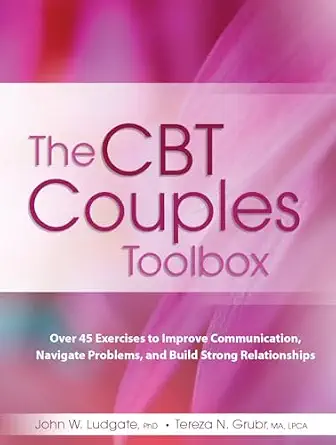 | Best Overall | Format: Paperback book | Approach: Cognitive-behavioral therapy (CBT) | Number of Exercises: 45+ | VIEW LATEST PRICE | See Our Full Breakdown |
| The Talk Book: With Six Prize-Winning Talk Tools That Strengthen Relationships and Repair Communication Breakdowns |  | Best for Skill Foundations | Format: Book (digital edition available) | Approach: Skill-based conversation tools | Number of Tools: 6 core techniques | VIEW LATEST PRICE | See Our Full Breakdown |
| 8-Week Couples Therapy Workbook: Essential Strategies to Connect, Improve Communication, and Strengthen Your Relationship |  | Best Structured Program | Format: Spiral-bound workbook | Program Length: 8 weeks | Approach: Guided workbook exercises | VIEW LATEST PRICE | See Our Full Breakdown |
| Couples Communication Workbook: 20 Minutes a Day for 12 Days to Improve Listening, Resolve Conflicts, and Strengthen Your Relationship |  | Best for Busy Couples | Format: Workbook | Program Length: 12 days | Daily Time Commitment: 20 minutes | VIEW LATEST PRICE | See Our Full Breakdown |
| Practical At-Home Couples Therapy Workbook |  | Best for Intimacy Rebuilding | Format: Workbook | Approach: Guided at-home therapy exercises | Focus Areas: Honest communication, intimacy, conflict repair | VIEW LATEST PRICE | See Our Full Breakdown |
| 12-Week Relationship Therapy Workbook for Couples | 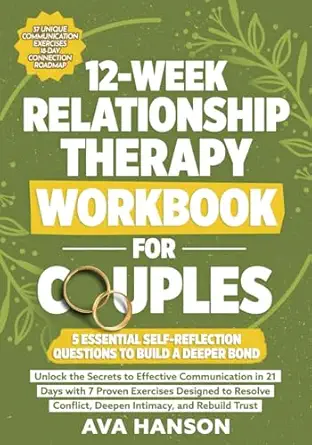 | Best for Long-Term Commitment | Format: Paperback workbook | Program Length: 12 weeks | Structure: Guided exercises, includes 21-day exercise sequence | VIEW LATEST PRICE | See Our Full Breakdown |
| Nonviolent Communication: A Language of Life |  | Best Foundational Framework | Format: Paperback / ebook / audiobook | Type: Communication methodology book (not a workbook) | Core Method: Four-step NVC process: observation, feeling, need, request | VIEW LATEST PRICE | See Our Full Breakdown |
| Communicate Your Feelings (Without Starting a Fight): What to Say and What Not to Say to Your Partner |  | Best for Quick Tactical Fixes | Format: Paperback / ebook | Type: Practical advice book with phrase guidance | Core Focus: Expressing feelings without triggering conflict | VIEW LATEST PRICE | See Our Full Breakdown |
| Love More, Fight Less: Communication Skills Every Couple Needs | 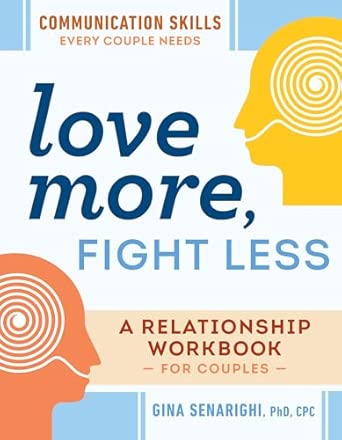 | Best Balanced Workbook | Format: Paperback / ebook | Type: Relationship communication workbook | Core Focus: Communication skills, conflict resolution, intimacy | VIEW LATEST PRICE | See Our Full Breakdown |
| Communication Skills for Couples Made Simple: 7-Step Workbook to Build Trust, Resolve Conflicts, Master Active Listening, and Create a Fulfilling Relationship in Just 10 Minutes a Day |  | Best for Busy Couples | Format: Workbook (print/ebook) | Program Structure: 7-step sequential system | Daily Time Commitment: Approximately 10 minutes per day | VIEW LATEST PRICE | See Our Full Breakdown |
| Healthy Communication With Your Partner: Discover the Benefits of Communicating with Emotional Intelligence, Empathy & Effective Listening Skills to Turn Conflict into Connection |  | Best for Emotional Intelligence Focus | Format: Paperback / digital book | Primary Focus: Emotional intelligence, empathy, effective listening | Core Framework: Turning conflict into connection | VIEW LATEST PRICE | See Our Full Breakdown |
| relationship communication tool | Format | Audience | Structure | Focus Areas |
|---|---|---|---|---|
| The CBT Couples Toolbox: Over | Paperback book | Couples seeking structured self-help | Modular exercises, self-paced | Communication, conflict resolution, emotional connection |
| The Talk Book: With Six Prize- | Book (digital edition available) | Couples experiencing repeated communication breakdowns | Concept-driven chapters | Communication repair, mutual understanding |
| 8-Week Couples Therapy Workboo | Spiral-bound workbook | Couples wanting structured at-home work | Week-by-week program | Connection, communication, relationship strength |
| Couples Communication Workbook | Workbook | Busy couples or beginners | — | Active listening, conflict resolution |
| Practical At-Home Couples Ther | Workbook | Couples seeking emotional reconnection | Self-paced guided exercises | Honest communication, intimacy, conflict repair |
| 12-Week Relationship Therapy W | Paperback workbook | — | Guided exercises, includes 21-day exercise sequence | Communication, conflict resolution, intimacy, trust |
| Nonviolent Communication: A La | Paperback / ebook / audiobook | Individuals or couples wanting a foundational framework | — | — |
| Communicate Your Feelings | Paperback / ebook | Individuals wanting scripts for partner conversations | What to say / what not to say guidance | — |
| Love More | Paperback / ebook | Couples at any stage wanting general communication improvement | Skills chapters paired with exercises and insights | — |
| Communication Skills for Coupl | Workbook (print/ebook) | Busy couples wanting a low-time-commitment habit | — | — |
| Healthy Communication With You | Paperback / digital book | Committed couples wanting deeper conversational skills | Concept-driven chapters, not a dated workbook program | — |
More Details on Our Top Picks
The CBT Couples Toolbox: Over 45 Exercises to Improve Communication, Navigate Problems and Build Strong Relationships
The CBT Couples Toolbox stands out for its sheer depth: with over 45 evidence-based exercises, it functions less like a book and more like a working toolkit that a couple can return to for years. Where The Talk Book teaches a small set of core skills, this option assumes you want a full library of techniques drawn from cognitive-behavioral therapy, which gives it real staying power for couples whose problems shift over time. That breadth is also its main tradeoff — the volume of material can feel overwhelming, and progress depends on both partners actually working through the exercises rather than skimming. Compared with the 8-Week Couples Therapy Workbook, this pick makes more sense for couples who want flexibility to pick and choose rather than a fixed weekly schedule.
Pros:- 45+ exercises offer long-term value and variety
- Grounded in cognitive-behavioral therapy techniques
- Flexible format — couples can target specific problems
- Strong emphasis on both communication and problem-solving
Cons:- Requires genuine commitment from both partners to complete exercises
- Not a substitute for professional therapy for serious issues
Best for: Committed couples who want a deep, reusable library of CBT-based exercises rather than a short program
Not ideal for: Couples in crisis who need a quick, linear plan — the sheer number of exercises can stall momentum
- Format:Paperback book
- Approach:Cognitive-behavioral therapy (CBT)
- Number of Exercises:45+
- Focus Areas:Communication, conflict resolution, emotional connection
- Structure:Modular exercises, self-paced
- Audience:Couples seeking structured self-help
Our verdict“The best pick for couples who want the most complete, reusable set of communication exercises they can grow into over time.”
The Talk Book: With Six Prize-Winning Talk Tools That Strengthen Relationships and Repair Communication Breakdowns
Where most workbooks in this roundup bury their techniques inside long programs, The Talk Book takes the opposite approach: it teaches six core talk tools and teaches them thoroughly. This focus is its biggest strength — instead of sampling 45 exercises like The CBT Couples Toolbox, readers master a compact set of conversational skills they can apply immediately during real arguments. That makes it a strong starting point for couples who keep having the same fights and need a shared vocabulary to break the pattern. The tradeoff is age and format: this is an older title without the modern workbook layout, spiral binding, or daily prompts found in newer picks like the Couples Communication Workbook. Couples who want guided writing exercises will need to pair it with something more structured.
Pros:- Six focused tools are easy to remember and apply in real conversations
- Specifically targets communication breakdowns and repair
- Skills-first approach works for couples who dislike homework-heavy workbooks
- Award-recognized methodology
Cons:- Older title with less modern formatting and fewer interactive exercises
- Limited availability of detailed product information and ratings
Best for: Couples who argue in circles and want a small, memorable set of conversation skills over a workbook full of prompts
Not ideal for: Couples who want fill-in exercises and modern workbook formatting — this is a skills-focused read, not an interactive program
- Format:Book (digital edition available)
- Approach:Skill-based conversation tools
- Number of Tools:6 core techniques
- Focus Areas:Communication repair, mutual understanding
- Structure:Concept-driven chapters
- Audience:Couples experiencing repeated communication breakdowns
Our verdict“A smart choice for couples who want to master a handful of durable conversation skills instead of working through a long program.”
8-Week Couples Therapy Workbook: Essential Strategies to Connect, Improve Communication, and Strengthen Your Relationship
This is the pick for couples who do best with external structure and accountability. The eight-week program lays out a clear arc from connection-building to communication to conflict work, and the spiral-bound format is a genuinely practical touch — the book lies flat while both partners write, which matters more than it sounds during a two-person exercise. Compared with the Couples Communication Workbook‘s 12-day sprint, this option trades speed for depth, giving each theme room to breathe across a full week. That longer runway is a double-edged sword: it allows real behavioral change, but it also demands sustained commitment, and couples who miss a few weeks often abandon the book entirely. It sits between the modest scope of shorter workbooks and the sprawling 45-exercise CBT Couples Toolbox.
Pros:- Clear 8-week progression builds skills gradually
- Spiraral-bound design lies flat for joint exercises
- Balances communication, connection, and conflict work
- Longer timeline allows real habit formation
Cons:- Requires sustained 8-week commitment from both partners
- Limited supplementary materials compared with larger toolkits
Best for: Self-disciplined couples who want a clear, week-by-week roadmap with time to practice each skill
Not ideal for: Couples with unpredictable schedules or low follow-through — an 8-week commitment is easy to abandon midway
- Format:Spiral-bound workbook
- Program Length:8 weeks
- Approach:Guided workbook exercises
- Focus Areas:Connection, communication, relationship strength
- Structure:Week-by-week program
- Audience:Couples wanting structured at-home work
Our verdict“The strongest choice for couples who thrive on a slow, structured program they can physically work through together.”
Couples Communication Workbook: 20 Minutes a Day for 12 Days to Improve Listening, Resolve Conflicts, and Strengthen Your Relationship
The promise here is the most realistic in the lineup: 20 minutes a day for 12 days. That’s roughly four total hours, which makes this the easiest entry point for couples with kids, conflicting shifts, or limited patience for self-help homework. Compared with the 8-Week Couples Therapy Workbook, this model sacrifices depth for completion — a 12-day program is one most couples will actually finish, and a finished short program beats an abandoned long one. The tight format also forces clarity, focusing tightly on listening skills and conflict resolution rather than trying to cover everything. The obvious tradeoff is scope: couples with deeper resentments or long-standing patterns will hit the end of day 12 wanting more, and would be better served by the CBT Couples Toolbox‘s 45-exercise depth.
Pros:- 20-minute daily sessions fit busy schedules
- Short 12-day timeline makes completion realistic
- Focused on two high-impact skills: listening and conflict resolution
- Low barrier to entry for couples new to self-help work
Cons:- Limited depth compared with longer programs
- Minimal author and content information available for evaluation
Best for: Time-strapped couples who want a short, finishable program that fits around kids, work, and packed schedules
Not ideal for: Couples working through deep or long-standing conflict — 12 days is not enough runway for major repair work
- Format:Workbook
- Program Length:12 days
- Daily Time Commitment:20 minutes
- Approach:Daily guided exercises
- Focus Areas:Active listening, conflict resolution
- Audience:Busy couples or beginners
Our verdict“The best pick for busy couples who want a quick, complete win rather than a months-long commitment.”
Practical At-Home Couples Therapy Workbook
What separates this workbook from the others in this roundup is its explicit pairing of honest communication with intimacy restoration. Where the Couples Communication Workbook keeps its focus on listening and conflict mechanics, this option treats emotional and physical closeness as inseparable from how partners talk to each other — a better fit for couples who feel more like roommates than romantic partners. Its at-home therapy framing also makes it approachable for couples curious about counseling but not ready to book a session. The tradeoff is that its guided exercises demand real vulnerability, and one partner consistently doing the emotional heavy lifting will limit results. Compared with the technique-driven Talk Book, this pick suits couples whose core issue isn’t arguing skill but emotional distance.
Pros:- Explicitly addresses intimacy and emotional reconnection, not just talk techniques
- At-home therapy framing lowers the barrier for couples wary of counseling
- Guided exercises encourage honest, structured conversations
- Works for couples at any relationship stage
Cons:- Results require equal emotional investment from both partners
- Less detailed content information than more established titles
Best for: Couples drifting into roommate mode who want to rebuild honesty, intimacy, and closeness together at home
Not ideal for: Couples primarily fighting about specific conflicts or logistics — this leans emotional rather than conflict-tactical
- Format:Workbook
- Approach:Guided at-home therapy exercises
- Focus Areas:Honest communication, intimacy, conflict repair
- Structure:Self-paced guided exercises
- Setting:Designed for at-home use
- Audience:Couples seeking emotional reconnection
Our verdict“The right choice for couples whose communication problems stem from emotional distance and who want intimacy back at the center.”
12-Week Relationship Therapy Workbook for Couples
This option stands out for couples who want a sustained, quarter-long program rather than a quick fix. Compared with the Couples Communication Workbook, which compresses its curriculum into 12 days, this one spreads communication, conflict, intimacy, and trust work across a full 12 weeks — a slower pace that gives habits time to actually stick. That pacing is also the main tradeoff: partners with unpredictable schedules may struggle to stay consistent, and a stalled program can become its own source of friction. The structure rewards couples who treat it like a standing appointment, with exercises that build on one another rather than repeating. If your relationship needs gradual rebuilding after a rupture rather than tactical tips, this format makes more sense than the shorter, faster workbooks in this lineup.
Pros:- Long 12-week arc lets new communication habits solidify instead of evaporating
- Explicitly addresses trust rebuilding alongside everyday communication
- Covers conflict resolution and intimacy, not just listening skills
- Structured exercises remove the guesswork of ‘what should we work on tonight’
Cons:- Requires significant ongoing time commitment from both partners
- No customer ratings available to gauge real-world results
- Couples expecting quick tactical fixes will find the pace slow
Best for: Couples recovering from a breach of trust who can commit to a structured, months-long program together
Not ideal for: Busy or long-distance couples with irregular schedules — the week-by-week progression falls apart without consistent joint participation
- Format:Paperback workbook
- Program Length:12 weeks
- Structure:Guided exercises, includes 21-day exercise sequence
- Focus Areas:Communication, conflict resolution, intimacy, trust
- Best Use:Couples working through sustained relationship repair
- Time Required:Weekly sessions over three months
Our verdict“Pick this if you and your partner want a slow, deliberate rebuild over months — skip it if you can’t protect weekly time together.”
Nonviolent Communication: A Language of Life
Where most entries in this roundup are couple-specific workbooks, this classic takes a broader philosophical approach — teaching a four-part observation-feeling-need-request method that applies at work, with family, and in romantic relationships alike. Compared with Communicate Your Feelings (Without Starting a Fight), which hands you ready-made phrases for partner conversations, this book asks you to internalize a whole language, which takes more effort upfront but produces deeper change. The tradeoff is real: there are no fill-in-the-blank exercises here, so couples wanting structured homework will need to pair it with something like Love More, Fight Less. Still, as the intellectual backbone of compassionate communication, it remains the reference point most other titles borrow from.
Pros:- Teaches a transferable framework usable in every relationship, not just romantic ones
- Widely referenced method that underpins much of modern couples communication advice
- Clear, practical writing with real dialogue examples
- Decades of readership and established reputation
Cons:- No structured exercises — requires self-directed practice
- The method can feel formulaic or stilted when first applied in real arguments
- Broader scope means less couple-specific troubleshooting
Best for: Readers who want to understand why conversations go wrong, not just memorize scripts for them
Not ideal for: Couples seeking a done-for-you workbook with exercises and prompts — this is theory and method, not homework
- Format:Paperback / ebook / audiobook
- Type:Communication methodology book (not a workbook)
- Core Method:Four-step NVC process: observation, feeling, need, request
- Scope:Personal and professional relationships, including couples
- Exercises:Examples and practice dialogues, no workbook prompts
- Audience:Individuals or couples wanting a foundational framework
- Editions:Multiple editions available; verify before purchase
Our verdict“This is the book to read if you want to change how you communicate everywhere — pair it with a workbook for hands-on practice.”
Communicate Your Feelings (Without Starting a Fight): What to Say and What Not to Say to Your Partner
This pick makes the most sense for readers who want exact wording — what to say and, just as usefully, what not to say — during charged moments with a partner. Unlike Nonviolent Communication, which builds a framework you must adapt yourself, this book hands you ready-to-use phrases for common flashpoints, which is genuinely helpful when you’re upset and can’t think on your feet. The tradeoff for that immediacy is depth: there’s little here about root causes or long-term patterns, so couples with recurring structural conflicts will outgrow it quickly. It also sits lighter than the 12-Week Relationship Therapy Workbook, which demands real work but delivers deeper change. As a fast, low-effort intervention for everyday friction, though, it earns its spot.
Pros:- Concrete do-say/don’t-say guidance rather than abstract theory
- Very low barrier to entry — no exercises or scheduling required
- Directly targets the moment of conflict, when advice is most needed
- Easy-to-digest format for readers short on time or patience
Cons:- Shallow treatment of root causes behind recurring fights
- Minimal detail available on content depth, length, or format
- Scripted phrases can feel inauthentic if applied mechanically
Best for: Partners who freeze up or escalate during arguments and want concrete scripts they can use tonight
Not ideal for: Couples dealing with deep-seated trust issues or repeating conflict patterns — phrase-level fixes won’t address the underlying dynamic
- Format:Paperback / ebook
- Type:Practical advice book with phrase guidance
- Core Focus:Expressing feelings without triggering conflict
- Structure:What to say / what not to say guidance
- Exercises:Minimal — primarily reference-style advice
- Time Required:Low; read-as-needed format
- Audience:Individuals wanting scripts for partner conversations
Our verdict“Buy this for immediate phrase-level help in heated moments; look elsewhere if your conflicts run deeper than wording.”
Love More, Fight Less: Communication Skills Every Couple Needs
This option stands out as the middle path in this roundup: more structured than Nonviolent Communication, less demanding than the 12-Week Relationship Therapy Workbook. It blends communication strategies with hands-on exercises aimed at both conflict resolution and intimacy, making it a sensible default for couples who want to grow without committing to a therapy-length program. Compared with Communication Skills for Couples Made Simple, which promises results from ten minutes a day, this one asks for more genuine engagement — and rewards it with broader coverage of how couples misread each other, not just how to phrase complaints. The drawback is that ‘every couple’ focus: nothing here is tailored to a specific problem like infidelity or chronic resentment, so couples in crisis may find it too gentle.
Pros:- Balances explanatory insight with practical exercises, unlike pure theory or pure drill books
- Covers both conflict de-escalation and deeper intimacy building
- Flexible pacing — no rigid daily or weekly schedule to fall behind on
- Traditionally published with broad availability and established readership
Cons:- Generalist coverage means no deep treatment of severe issues
- Requires both partners to actively participate for exercises to work
- Less structure than scheduled programs, which can lead to drifting off
Best for: Stable couples who want a well-rounded mix of insight and exercises to prevent bad habits from forming
Not ideal for: Couples in active crisis — the general-purpose approach lacks the intensity and specificity a damaged relationship needs
- Format:Paperback / ebook
- Type:Relationship communication workbook
- Core Focus:Communication skills, conflict resolution, intimacy
- Structure:Skills chapters paired with exercises and insights
- Exercises:Yes — couple-based activities throughout
- Pacing:Flexible; self-directed
- Audience:Couples at any stage wanting general communication improvement
Our verdict“The best default choice for healthy couples who want to get better before things get worse — not the right tool for relationships already in serious trouble.”
Communication Skills for Couples Made Simple: 7-Step Workbook to Build Trust, Resolve Conflicts, Master Active Listening, and Create a Fulfilling Relationship in Just 10 Minutes a Day
The ten-minute-a-day promise is this workbook’s entire identity, and it’s a legitimate one: compared with the 12-Week Relationship Therapy Workbook, which assumes you can carve out sustained sessions, this one is built for partners whose calendars barely overlap. Its seven-step sequence keeps daily prompts small and specific — active listening drills, short trust exercises — so momentum survives even hectic weeks. The obvious tradeoff is depth: ten minutes buys you habit-building, not transformation, and couples with serious entrenched conflict will find the pace too gentle. It also lacks the reader track record of established titles like Nonviolent Communication, so you’re trusting the structure on faith. For maintenance-minded, time-starved couples, though, a program you’ll actually finish beats an ambitious one you abandon.
Pros:- Ten-minute format is genuinely achievable for busy schedules
- Clear 7-step progression gives structure without overwhelm
- Covers active listening, trust, and conflict in one compact system
- Small daily habit is more sustainable than long weekly sessions
Cons:- Brevity limits depth on any single topic
- No customer reviews yet to validate real-world effectiveness
- Light coverage of serious issues like betrayal or chronic resentment
Best for: Time-strapped couples — new parents, dual-shift workers — who want a realistic daily habit over an ambitious program
Not ideal for: Couples facing major conflict or trust breakdowns — brief daily prompts can’t substitute for deeper, longer-form work
- Format:Workbook (print/ebook)
- Program Structure:7-step sequential system
- Daily Time Commitment:Approximately 10 minutes per day
- Core Focus:Trust building, conflict resolution, active listening
- Exercises:Short daily practice prompts
- Pacing:Daily; self-guided
- Audience:Busy couples wanting a low-time-commitment habit
Our verdict“Choose this if the real obstacle is time, not willingness — and pick a deeper workbook if your problems are bigger than your calendar.”
Healthy Communication With Your Partner: Discover the Benefits of Communicating with Emotional Intelligence, Empathy & Effective Listening Skills to Turn Conflict into Connection
Most workbooks in this space, like the 8-Week Couples Therapy Workbook or Love More, Fight Less, lead with exercises and scripts. This title takes a different route: it builds the emotional foundations first, arguing that empathy and effective listening are what make any technique actually work in a heated moment. For couples who have already tried prompt-style workbooks and found the conversations still collapsed into arguments, this why-before-how approach is the missing layer.
The tradeoff is structure. Compared with the Couples Communication Workbook, which lays out a tidy 12-day, 20-minute-a-day plan, this book demands more self-directed reading and reflection. There are no dated sessions or fill-in pages, so couples who want accountability and a clear roadmap will likely stall without them. The sprawling title also hints at the content inside: broad, idea-driven, and better suited to readers than to doers.
Pros:- Focuses on emotional intelligence and empathy, the root skills most workbooks skip
- Frames conflict as a path to connection rather than something to avoid
- Strong complement to exercise-heavy workbooks that failed to stick
- Readable approach for couples who prefer understanding over drills
Cons:- No structured program, timelines, or workbook exercises to keep couples accountable
- Limited reader reviews and product details make quality harder to verify before buying
Best for: Couples who have tried exercise-based workbooks and want to understand the emotional intelligence and empathy skills underneath good communication
Not ideal for: Couples who need structure and accountability — there is no day-by-day program or fill-in format like the 12-day or 8-week workbooks in this roundup
- Format:Paperback / digital book
- Primary Focus:Emotional intelligence, empathy, effective listening
- Core Framework:Turning conflict into connection
- Structure:Concept-driven chapters, not a dated workbook program
- Exercises Included:Minimal — reflection over fill-in activities
- Best Use Case:Foundational reading before or alongside a structured workbook
- Audience:Committed couples wanting deeper conversational skills
Our verdict“Pick this if you want to build the empathy and listening skills behind every good conversation, and skip it if you need a step-by-step workbook to keep you on track.”

How We Picked
I evaluated each tool against five buyer-relevant criteria: methodology and evidence base (does it draw on established frameworks like CBT or nonviolent communication, or generic advice), time commitment and structure (a 12-week program is useless if couples quit by week two), actionability (exercises and scripts beat theory-heavy prose), accessibility for one partner working alone, and value relative to a single therapy session. Every option here costs less than one couples counseling session, but the depth varies enormously.
The ranking reflects a simple philosophy: the best relationship communication tool is the one both partners will actually use. That is why structured, time-boxed programs rank higher than comprehensive ones with higher dropout risk, and why books offering concrete scripts outrank those relying on abstract principles. Tools better suited to specific situations — severe conflict, single-partner use, or deep personal growth — were placed lower overall but flagged for the buyers they serve best.
| relationship communication tool | Focus Areas |
|---|---|
| The CBT Couples Toolbox: Over | Communication, conflict resolution, emotional connection |
| The Talk Book: With Six Prize- | Communication repair, mutual understanding |
| 8-Week Couples Therapy Workboo | Connection, communication, relationship strength |
| Couples Communication Workbook | Active listening, conflict resolution |
| Practical At-Home Couples Ther | Honest communication, intimacy, conflict repair |
| 12-Week Relationship Therapy W | Communication, conflict resolution, intimacy, trust |
| Nonviolent Communication: A La | — |
| Communicate Your Feelings | — |
| Love More | — |
| Communication Skills for Coupl | — |
| Healthy Communication With You | — |
Factors to Consider When Choosing Relationship Communication Tools
Choosing a relationship communication tool is less about finding the ‘best’ book and more about matching the format to your relationship’s temperament, schedule, and conflict level. These are the factors that actually predict whether a tool gets used or sits on a nightstand.Match the Time Commitment to Your Real Schedule
The single most common mistake couples make is buying an ambitious program they will abandon. Be honest about capacity: a dual-career couple with toddlers will not sustain a 12-week workbook, no matter how good its content is. A 10-20 minute daily format has far higher completion rates, and completion matters more than depth because communication habits are built through repetition, not through absorbing more information. If you genuinely have an hour a week together, the longer structured programs deliver more transformative results. When in doubt, start short — you can always buy the 12-week program after finishing a 12-day one.
Skills Book Versus Workbook: Know the Difference
Skills-based books like Nonviolent Communication teach frameworks you carry into every conversation, including ones at work and with family. Workbooks force practice through prompts, quizzes, and shared exercises. Neither is superior — they solve different problems. A common purchasing error is buying a deep skills book for a partner who ‘doesn’t read,’ which guarantees it goes unfinished. Workbooks are the safer default for couples because the format invites participation; skills books reward motivated readers and often work well when one partner studies them and models the techniques. Ideally, one partner reads the framework while both complete the exercises together.
Assess Your Conflict Level Honestly
Tools designed for mild disconnection can feel patronizing during serious conflict, while tools built for crisis-level arguing can feel overwhelming for couples who simply want to listen better. High-conflict couples benefit most from script-based tools that tell you exactly what to say and what not to say in the heat of an argument. Couples in stable but distant relationships get more from connection-focused exercise workbooks. If arguments regularly escalate into contempt or stonewalling, no book replaces a licensed therapist — the right tool in that case is one designed to supplement professional help, not substitute for it.
Consider Whether One Partner Will Do the Work Alone
Many buyers purchase these tools hoping a reluctant partner will eventually join in. If that is your situation, prioritize tools explicitly designed for single-partner use, because one person changing their communication patterns genuinely shifts the dynamic. Emotional intelligence and empathy-focused books work better for solo learners than paired exercise workbooks, which require both people to participate. Be wary of any tool that promises results ‘for your partner’ — that framing usually backfires. The realistic solo path is learning better responses to conflict yourself and letting the change invite your partner in.
Watch for Red Flags in Content Quality
The relationship book market is flooded with low-effort titles that recycle the same advice: ‘listen actively, use I-statements.’ A quality tool cites a methodology — cognitive behavioral therapy, the Gottman approach, or nonviolent communication — and shows you how to apply it, not just that you should. Check whether the exercises produce conversation between partners or just individual reflection, because paired exercises are what actually rebuild connection. Also verify the author’s credentials or clinical background when the book claims therapeutic results. Vague promises without a named framework are the clearest sign of a generic product dressed up as a workbook.
Frequently Asked Questions
Can a workbook really replace couples therapy?
For couples with mild to moderate communication issues, a structured workbook can produce meaningful change at a fraction of therapy’s cost — many are written by licensed therapists and use the same exercises assigned in sessions. The advantage of workbooks is consistency: you practice skills weekly rather than discussing them for one hour a month. However, workbooks cannot diagnose underlying issues like untreated mental health conditions, infidelity trauma, or abusive patterns, and they lack the real-time guidance a therapist provides when exercises go wrong. If arguments regularly involve contempt, threats, or one partner shutting down completely, use these tools alongside professional help rather than instead of it. Think of the best workbooks as between-session practice, not a therapy substitute.
What if my partner won’t do the workbook with me?
This is one of the most common situations, and the good news is that several tools in this roundup work for solo learners. Books focused on emotional intelligence and personal communication habits teach you to change your own responses, which measurably shifts couple dynamics over time — arguments de-escalate faster when one person stops escalating. Avoid pressuring a reluctant partner into workbook exercises, as resentment undermines the whole process. A gentler approach is choosing a short, low-commitment format like a 12-day program and inviting participation casually rather than assigning it. Many couples report that visible change in one partner’s communication eventually draws the other in without any ultimatum.
Is a shorter program like 12 days really enough to change how we communicate?
Twelve days is enough to build awareness and establish a handful of new habits, but not enough to make them permanent without follow-through. The value of short programs is behavioral momentum — they get couples talking again, often for the first time in months, and prove that structured conversation time is possible. What happens after day 12 determines the long-term outcome: couples who keep even a weekly check-in ritual retain the gains, while those who stop revert quickly. Short programs also serve as an excellent test of whether a longer, deeper program suits you before committing to one. Treat them as on-ramps rather than destinations.
Should I choose a CBT-based tool or a nonviolent communication approach?
The two frameworks overlap heavily but suit different couples. CBT-based tools are more structured and exercise-driven, focusing on identifying negative thought patterns and replacing them with concrete behaviors — this suits couples who like clear steps and measurable progress. Nonviolent communication is more philosophical, teaching a four-step language for expressing needs without blame; it suits couples who want a deeper conceptual shift and are willing to practice it across all their relationships. CBT tools tend to feel more like homework, while NVC feels more like learning a new language. If one partner is skeptical of ‘therapy speak,’ the CBT format usually lands better because its exercises feel practical rather than abstract.
How do I get my partner to actually use scripts instead of our old patterns during fights?
Scripts fail when they’re first deployed mid-argument, because neither partner has rehearsed them under stress. The tools that teach scripts work best when couples practice them during calm, scheduled conversations first — the same way you would rehearse any skill before performing it. Agree in advance on a signal or phrase either partner can use to pause a heated moment, then return to the conversation later using the script. Expect awkwardness for the first several attempts; sounding scripted is normal and fades with repetition. Couples who abandon script-based tools usually do so because they expected fluency immediately, when the realistic timeline for natural-feeling new language is several weeks of consistent practice.
Conclusion
The right pick depends less on product quality — most of these are solid — and more on your relationship’s specific situation. Best overall goes to The CBT Couples Toolbox, which balances evidence-based method, exercise volume, and flexibility better than anything else in the lineup. Best value is the Couples Communication Workbook, whose 12-day, 20-minute format delivers outsized results for its price and time cost. Best for beginners is Communication Skills for Couples Made Simple, whose 7-step, 10-minute-a-day structure removes every possible excuse for starting. Best premium pick — meaning the deepest investment of effort with the deepest payoff — is Nonviolent Communication: A Language of Life for motivated couples. For specific needs: high-conflict couples should choose Communicate Your Feelings (Without Starting a Fight), solo learners benefit from Healthy Communication With Your Partner, and couples already in therapy get the most from the 8-Week Couples Therapy Workbook. Whatever you choose, the tool only works if it gets opened — pick the one you will both realistically finish.
Fall Picks
fall essentials
As an affiliate, we earn on qualifying purchases.