TL;DR

Get gifts for the two of you delivered free — and shop member deals
- Fast, free delivery on millions of items
- Access to Prime Big Deal Days deals on October 6–7
- Prime Video, Amazon Music and more included
A Bolde report argues that apologizing after someone else bumps you can reflect a learned effort to keep the peace, rather than weakness. Research supports the broader idea that people differ in what they perceive as an offense, but the report does not cite direct evidence that childhood conflict causes this specific habit.
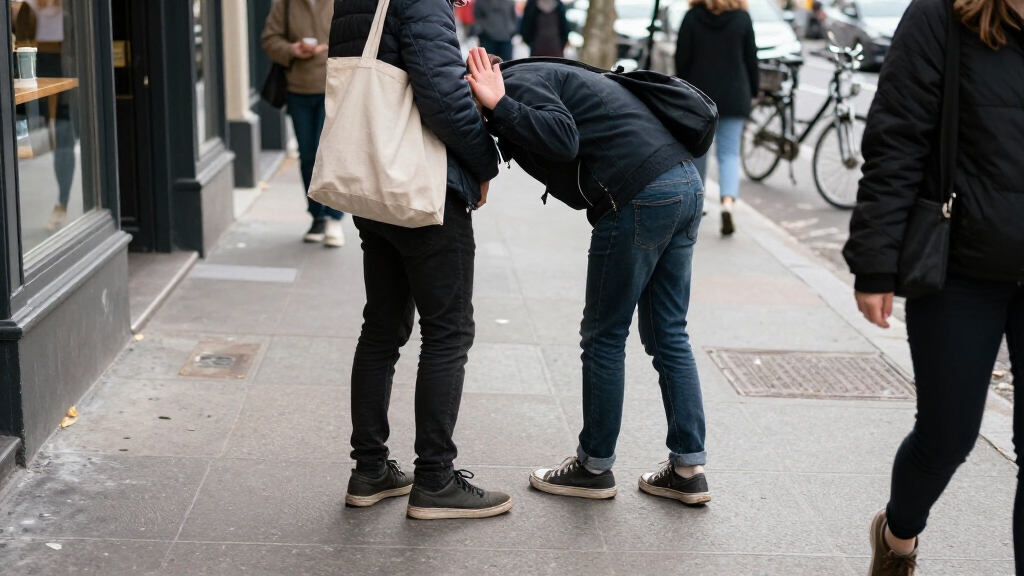
Bolde has published a report arguing that people who say “sorry” after someone else bumps into them may be repeating a peacekeeping habit learned in childhood. The account draws on research about everyday apologies and children exposed to family conflict, but the cited studies do not directly establish that childhood experiences cause this particular reflex.
The report describes the apology as a response that can come out before someone has worked out who caused a minor collision. It interprets that speed as a possible sign of habit rather than a deliberate admission of fault. That is the article’s explanation, not a conclusion demonstrated by the studies it cites.
Bolde points to a 2023 YouGov survey of more than 9,500 American adults. It reports that 24% said they apologized for things outside their control at least once a day, while 11% said they did so several times a day. The survey, as described in the report, did not ask why respondents apologized. Those figures show how respondents described their behavior; they do not explain its cause.
The article also discusses a 2010 diary study by University of Waterloo researchers Karina Schumann and Michael Ross. The 66 participants recorded apologies and offenses. Women apologized more often, but also reported more offenses, and both groups apologized for a similar share of offenses they noticed. A follow-up found that women rated the same offenses as more serious on average. The small study examined gender and judgments about offenses, not childhood peacekeeping or apologies after being bumped.
When an Apology Becomes a Reflex
The report offers a way to think about an everyday social habit that people may mistake for weakness. If an apology is automatic, it may be useful to ask whether the person is responding to actual responsibility or trying to reduce tension. That distinction can help readers describe the behavior without treating it as a character flaw.
But the explanation should not be treated as a diagnosis. Saying sorry after a collision can have many possible explanations, including politeness, uncertainty, social convention or a wish to avoid awkwardness. The supplied evidence does not show how often childhood conflict is behind the behavior, or whether the proposed link applies to a particular person.
What the Cited Research Examines
Bolde connects the habit to emotional security theory, developed by Patrick Davies and E. Mark Cummings in the 1990s. The framework describes how conflict between parents can affect children’s sense of safety. The report says a child may respond with distress, avoidance or involvement in the conflict. Trying to calm adults is one possible response, but the article does not provide a study measuring how often that response later becomes reflexive apologizing.
The report also draws on psychotherapist Pete Walker’s account of a “fawn” response, which he described in a 2003 article as an adaptation in which a child seeks safety by appeasing a threatening or difficult caregiver. Walker’s formulation comes from clinical work with trauma survivors; it is not a formal diagnosis, and it is distinct from the controlled research cited elsewhere in the report.
Bolde cites trauma therapist Shreya Mandal, writing for Psychology Today, who says the response “is not born of weakness.” Her framing presents appeasement as a way of seeking safety. It is a clinician’s interpretation, not proof that every frequent or automatic apology has the same origin.
“This response is not born of weakness.”
— Trauma therapist Shreya Mandal, as quoted by Bolde from Psychology Today
The Cause Has Not Been Tested
The central causal claim remains unconfirmed in the material provided. The YouGov survey did not ask why people apologized, the Waterloo study focused on perceived offenses and gender, and the family-conflict framework addresses children’s responses to conflict more broadly. None of these sources, as presented by Bolde, tracks whether children who tried to keep peace later apologize when others bump into them.
It is also unclear how common this exact behavior is, how it varies across settings, or how reliably an observer could distinguish a learned appeasement habit from ordinary courtesy. The report offers a plausible interpretation for some people, but does not establish it as a universal explanation.
What Readers Can Take From It
No new study or follow-up milestone is identified in the supplied report. The next evidence needed to test its explanation would directly examine people who apologize after others cause minor collisions, ask about the circumstances in which the habit developed, and account for other reasons people may apologize. Until then, the childhood peacekeeping link should be read as a proposed explanation rather than a settled finding.
For readers, the practical point is narrower: an apology by itself does not prove weakness, trauma or a particular family history. The reasons behind the habit remain individual and cannot be inferred from one brief interaction.
Key Questions
Does research prove that apologizing after being bumped comes from childhood conflict?
No. The sources summarized in the Bolde report do not directly test that specific link. The report presents it as a possible explanation.
What did the 2023 YouGov survey find?
According to Bolde, 24% of more than 9,500 American adults said they apologized for things outside their control at least once a day, and 11% said they did so several times a day. The survey did not ask why they apologized.
What did the 2010 apology study examine?
Karina Schumann and Michael Ross asked 66 adults to keep diaries of apologies and offenses. The study examined differences in apologies and perceived offenses; it did not investigate childhood peacekeeping.
Does saying sorry automatically mean someone is weak?
No conclusion about a person’s character follows from the habit alone. The cited therapist argues that appeasement can be an adaptation, while the report does not show that all automatic apologies share that cause.
Source: rss
Fall Picks
fall essentials
As an affiliate, we earn on qualifying purchases.