People comparing Attached by Amir Levine and Rachel Heller with Hold Me Tight by Sue Johnson are often deciding where to begin: with a clear framework for understanding relationship behavior, or with guided conversations aimed at changing a couple’s emotional patterns. Both draw on attachment ideas, but they serve different needs. Attached is shorter and easier to use as an individual reader trying to make sense of dating or recurring conflict. Hold Me Tight is more involved and better suited to partners willing to work through difficult conversations together. The practical tradeoff is speed and simplicity versus depth and shared practice.

Get gifts for the two of you delivered free — and shop member deals
- Fast, free delivery on millions of items
- Access to Prime Big Deal Days deals on October 6–7
- Prime Video, Amazon Music and more included

Attached: The New Science of Adult Attachment and How It Can Help You Find and Keep Love
- ✔ Format: Book
- ✔ Subject: Adult attachment
- ✔ Relationship focus: Romantic relationships

Communicate Your Feelings Without Starting a Fight: What to Say and What Not to Say to Your Partner
- ✔ Format: Guide
- ✔ Subject: Communication with a partner
- ✔ Stated focus: Expressing feelings
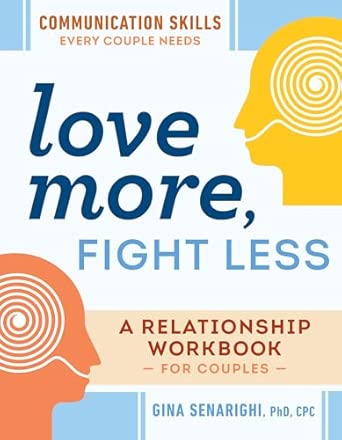
Love More, Fight Less: Communication Skills Every Couple Needs: A Relationship Workbook for Couples
- ✔ Format: Relationship workbook
- ✔ Intended audience: Couples
- ✔ Subject: Communication skills
At a Glance
| Criteria | Attached by Amir Levine and Rachel Heller | Hold Me Tight by Sue Johnson | Winner |
|---|---|---|---|
| Primary purpose | Recognize attachment styles and their effects on relationships | Strengthen emotional bonds through conversations and shared reflection | Depends |
| Best use | Dating decisions and understanding recurring patterns | Working through disconnection or conflict as a couple | A for dating; B for relationship repair |
| Accessibility | Shorter, direct, and relatively easy to read | More detailed and asks more of the reader | A |
| Couple exercises | Limited; more explanatory than workbook-like | Central to the book’s structure | B |
| Depth of emotional work | Moderate; focuses on patterns and needs | Greater emphasis on emotional responses and repair | B |
| Fit for individual readers | Strong fit for one person reading independently | Useful alone, but most powerful when both partners participate | A |
| Value | Usually the lower-cost, lower-commitment starting point | More effort to get through, with greater potential value for couples who use its exercises | Depends |
Attached: The New Science of Adult Attachment and How It Can Help You Find and Keep Love
Attached is the most useful starting point in this lineup for readers who want a framework for thinking about why romantic relationships feel secure or uncertain. Its stated focus on adult attachment gives it a broader lens than the other two books, which concentrate on communication skills and expression. That wider scope can help readers connect recurring relationship dynamics to a pattern rather than treating every disagreement as a standalone problem.Compared with Communicate Your Feelings Without Starting a Fight, this is less narrowly focused on choosing words during a tense conversation. It also differs from Love More, Fight Less, whose workbook framing points toward couples practice. The tradeoff is that a conceptual approach may not give readers the immediate conversation prompts they are seeking. The available description does not specify exercises or how the book handles different relationship situations, so readers wanting a structured, joint activity should consider the workbook instead.We rank it first because its subject is clearly defined and can serve readers exploring both current and future relationships. It is a strong match for pattern recognition and relationship context, but readers should not expect a substitute for individualized counseling or assume that a single framework explains every couple.
Pros:
- Explores adult attachment in romantic relationships
- Connects the topic to finding and maintaining love
- Offers a broader relationship lens than the two communication-focused picks
Cons:
- Less directly focused on wording for difficult conversations
- The provided description does not establish exercises or a couples-work format
- An attachment framework may not explain every relationship dynamic
Best for: Readers who want to understand how adult attachment styles may influence their romantic relationships.
Not ideal for: Couples looking primarily for a workbook or readers who need specific, ready-to-use wording for an argument.
Bottom line: Choose Attached when understanding relationship patterns matters more than getting a narrowly focused communication workbook.
“Choose <strong>Attached</strong> when understanding relationship patterns matters more than getting a narrowly focused communication workbook.”
Communicate Your Feelings Without Starting a Fight: What to Say and What Not to Say to Your Partner
When the immediate challenge is bringing up a feeling without turning the conversation into a fight, this guide has the most targeted promise in the group. Its stated emphasis on what to say and what to avoid makes it more directly actionable in scope than Attached, which examines adult attachment, and more individually focused than the couples workbook Love More, Fight Less.That specificity is also its limit. A guide centered on phrasing may be a sensible fit when readers want to reconsider how they communicate, but the product information does not explain its method, examples, length, or whether it includes practice activities. We should therefore avoid assuming it offers scripts, conflict-resolution steps, or a particular therapeutic approach. Readers seeking a broader account of relationship patterns may find Attached more relevant; couples hoping to work through communication skills together may lean toward the workbook.We place it second because its focus is clear but its supporting details are sparse. It makes most sense for someone seeking a narrow communication aid and willing to check the listing for fuller contents. It is less compelling when the goal is shared exercises or insight into long-running relationship dynamics.
Pros:
- Directly addresses expressing feelings to a partner
- Focuses on both what to say and what to avoid
- Has a narrower communication focus than the other two picks
Cons:
- The supplied product description gives no details about its specific approach
- No exercise format or examples are established by the available information
- Does not have the broader attachment focus of Attached
Best for: Readers who want guidance focused on expressing feelings to a partner and avoiding language that may start a fight.
Not ideal for: Readers looking for attachment theory, a detailed couples workbook, or a clearly documented set of exercises.
Bottom line: Pick this guide when wording during difficult conversations is your main concern, and check its contents if you need a particular method or exercise format.
“Pick this guide when wording during difficult conversations is your main concern, and check its contents if you need a particular method or exercise format.”
Love More, Fight Less: Communication Skills Every Couple Needs: A Relationship Workbook for Couples
Love More, Fight Less is the clearest format match for partners who want to approach communication as a shared activity. The title identifies it as a relationship workbook for couples, and the description says it focuses on communication skills. That makes it distinct from the other picks: Attached is framed around understanding attachment, while the feelings guide is about expressing emotions and choosing what to say or avoid.A workbook may suit couples who prefer active participation over reading about relationship concepts alone. But the listing information supplied here does not describe the exercises, how partners use them, or whether the material is organized for independent or guided work. The format is a meaningful clue, not proof of any particular activity or result. Compared with the feelings guide, this book sounds more explicitly designed for both partners; compared with Attached, it offers a narrower communication focus rather than a broad attachment lens.We rank it third because its intended audience and format are clear, yet the available description is the least detailed about what readers will actually do. It may be the best fit when both people are ready to participate, but a solo reader or someone seeking a well-specified method may want to inspect the contents before deciding.
Pros:
- Explicitly presented as a relationship workbook for couples
- Centers on communication skills
- More clearly couple-oriented than the other two picks
Cons:
- The available description does not explain the workbook exercises
- No details establish how partners should work through it
- Narrower communication scope than Attached’s attachment focus
Best for: Couples who want a workbook explicitly focused on communication skills and are prepared to participate together.
Not ideal for: Solo readers, or buyers who need detailed information about the exercises and structure before choosing.
Bottom line: Choose this workbook when shared communication practice is the priority, after confirming that its contents suit how you and your partner want to work.
“Choose this workbook when shared communication practice is the priority, after confirming that its contents suit how you and your partner want to work.”
As an Amazon Associate we earn from qualifying purchases.
Key Differences
The books differ most in what they ask readers to do. Attached offers a compact lens: identify patterns often described as secure, anxious, or avoidant, then consider how those patterns affect compatibility and communication. That makes it easy to start reading alone and apply ideas to dating choices. Its strength is orientation; it gives readers language for behavior they may already recognize. Its limit is that a label can become a shortcut if readers treat it as a fixed diagnosis or use it to explain every disagreement.
Hold Me Tight is built around the emotional cycle that can trap partners in conflict and the conversations that may help them reconnect. It takes more time and willingness to be candid, especially if both people are involved. The payoff is a more active process for couples who want to understand what sits underneath their arguments and practice responding differently. It is not a substitute for professional help when a relationship involves coercion, abuse, or serious safety concerns.
For value, the better buy depends on whether the reader needs insight or a shared method. If you want a low-effort first read about dating patterns, Attached is likely to deliver more per hour and may cost less. Paying more, or simply investing more reading time, in Hold Me Tight makes sense when both partners intend to use its conversations. A book left unread or attempted by only one unwilling partner will not provide that extra value.
Detailed Comparison
Primary purpose (moderate difference)
Attached explains how attachment patterns can shape partner choice and relationship behavior. Hold Me Tight focuses on emotional connection and the interaction cycles couples can work to change. There is no universal winner: A is more useful for understanding patterns, while B is more useful for relationship repair. The gap is moderate because the books overlap in attachment themes but aim at different outcomes.
Best use (major difference)
For someone dating or trying to make sense of repeated partner dynamics, Attached offers the more direct starting point. For established partners who feel distant or repeatedly stuck in the same argument, Hold Me Tight provides a stronger shared process. The difference is major in practice: choose by the problem you want to address, not by which title sounds more authoritative.
Accessibility (Attached by Amir Levine and Rachel Heller wins — moderate)
Attached is shorter and presents its central framework in a more immediately digestible way. Hold Me Tight asks readers to stay with more detailed emotional material and follow a series of conversations. A wins by a moderate margin for readers with limited time or appetite for introspection; B’s added effort serves readers ready for deeper work.
Hold Me Tight wins clearly because guided conversations are central to its approach, making it more practical for partners willing to participate together. Attached is primarily an explanatory guide and can spark discussion, but it is not as structured for joint practice. This is a major gap for couples seeking something to do together, and a minor one for solo readers.
Depth of emotional work (Hold Me Tight by Sue Johnson wins — moderate)
Hold Me Tight spends more time on emotional vulnerability, disconnection, and repair. Attached is more focused on recognizing patterns and considering their consequences. B wins moderately for readers looking to explore relationship dynamics in depth; A is easier to finish and may be sufficient when the goal is awareness rather than a couple’s process.
Fit for individual readers (Attached by Amir Levine and Rachel Heller wins — moderate)
Attached is the more natural solo read, particularly for someone assessing dating experiences or their own recurring responses. One person can read Hold Me Tight, but its exercises have greater practical reach when a partner joins in. A wins moderately for independence; B can still help an individual reflect, but it cannot make a shared conversation happen alone.
Value for money and effort (moderate difference)
Attached is often the more economical and time-efficient entry point, while Hold Me Tight earns its greater commitment when both partners use its exercises. Since editions and prices vary, compare current prices before buying. The value winner depends on follow-through: A for a concise framework, B for couples who will work through the material together.
Attached by Amir Levine and Rachel Heller: Pros and Cons
Pros:
- Clear, memorable framework for attachment patterns
- Accessible for solo readers and people dating
- Useful for identifying recurring relationship dynamics
- Often a lower-commitment place to start
Cons:
- Less structured for couples who want guided conversations
- Attachment labels can oversimplify individuals if applied rigidly
- Less focused on practicing repair during conflict
Hold Me Tight by Sue Johnson: Pros and Cons
Pros:
- Offers structured conversations for partners to try together
- Explores emotional disconnection and recurring conflict in depth
- Better aligned with couples seeking reconnection
Cons:
- Requires more time and emotional effort
- Most useful when both partners are willing to participate
- May feel too involved for readers who only want a quick introduction
Who Should Choose What
Choose Attached by Amir Levine and Rachel Heller if:
- You are dating and want a framework for understanding relationship patterns.
- You plan to read on your own and need a clear, relatively concise starting point.
- You want insight into attachment dynamics before deciding what to explore next.
Choose Hold Me Tight by Sue Johnson if:
- You and your partner want to examine recurring conflict and disconnection together.
- You are willing to make time for guided emotional conversations.
- You want a deeper process rather than mainly a framework for labeling patterns.
Skip both if: Skip both as your main resource if you need help with abuse, coercion, immediate safety, or severe ongoing distress; seek appropriate professional or local support.
Value for Money
Attached is usually the stronger value for readers who want an accessible explanation of attachment patterns without a large time commitment. It can answer an individual reader’s basic question—why do I keep encountering or responding to these dynamics?—at a relatively modest cost. Hold Me Tight is worth the added effort when a couple will read and practice together. Its value comes from using the conversations, not simply owning a more detailed book. Check the current edition and price of each before purchasing, since costs vary by format and retailer.
Final Verdict
Choose Attached if you want to understand dating patterns or read independently; it is the clearer first purchase for most solo readers. Choose Hold Me Tight if your central goal is rebuilding connection with a willing partner. The deciding factor is whether you need a framework or a shared practice: Attached explains more quickly, while Hold Me Tight asks more and can do more for couples who follow through. If both partners are ready to work, B is the stronger relationship-focused choice; otherwise, A is the more practical starting point.
Frequently Asked Questions
Which book should I read first?
Start with Attached if you are reading alone or want a concise introduction to attachment patterns. Start with Hold Me Tight if you and your partner want to work on emotional connection together.
Can I use Hold Me Tight if my partner will not read it?
Yes, you can use it for personal reflection, but its guided conversations are designed to be shared. If your partner is not participating, Attached may be a more immediately useful solo read.
Does Attached diagnose a partner’s attachment style?
No. Treat its categories as a framework for reflection, not a clinical diagnosis or a fixed label. A person’s behavior can vary by relationship and circumstance.
Is either book a replacement for couples therapy?
No. Books can support reflection and conversation, but they cannot assess a couple’s full situation or provide tailored care. Consider a qualified professional for persistent or serious problems, and prioritize safety where there is abuse or coercion.
Fall Picks
fall essentials
As an affiliate, we earn on qualifying purchases.