

Heartbreak can make it hard to rest because your mind is flooded with racing thoughts, emotions like grief or anger, and unresolved pain. These feelings can keep your brain active at night, making sleep elusive. To improve, try establishing a calming routine, journaling feelings, and creating a peaceful sleep environment. Managing lifestyle choices and practicing patience are also key. Keep exploring to discover effective strategies that can help you heal and find restful sleep again.
Key Takeaways
- Heartbreak triggers intense emotions like grief and anger, making it difficult to relax and fall asleep.
- Racing thoughts from past memories or regrets can keep your mind active at night.
- Poor sleep hygiene, such as screen use before bed or an uncomfortable environment, worsens sleep difficulties.
- Practicing calming routines like journaling, mindfulness, and deep breathing helps soothe emotional turmoil.
- Consistently applying sleep-friendly habits and giving yourself time supports emotional healing and better rest.
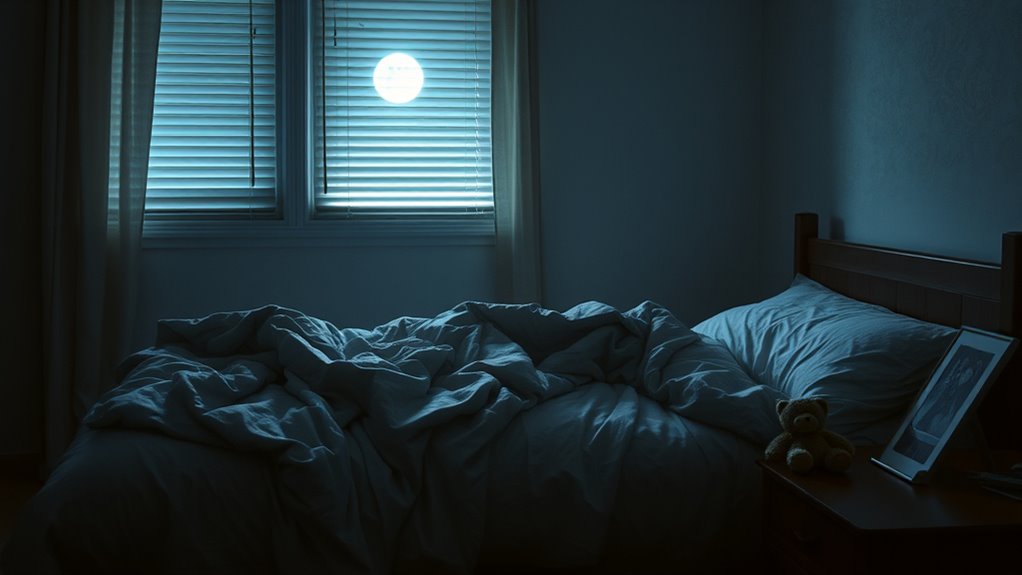
When you’re heartbroken, it’s common to find yourself lying awake at night, struggling to quiet your racing mind. Your thoughts swirl around past memories, regrets, or what-ifs, making it tough to drift into sleep. During these times, emotional healing becomes a priority, but that process can feel overwhelming when sleep eludes you. Sleep hygiene plays a pivotal role here; it’s the foundation for restful nights and can help ease the emotional turmoil you’re experiencing.
When heartache keeps you awake, prioritize sleep hygiene to support emotional healing and restful nights.
To improve your sleep hygiene, start by establishing a consistent bedtime routine. Going to bed and waking up at the same time every day helps regulate your internal clock, making it easier to fall asleep even when your mind is racing. Avoid screens at least an hour before bed, as the blue light emitted by phones and computers can interfere with melatonin production, making it harder to unwind. Instead, try calming activities like reading, gentle stretching, or listening to soothing music. Creating a sleep-friendly environment is equally important—keep your bedroom cool, dark, and quiet to signal to your body that it’s time to rest.
Addressing emotional healing is equally essential. Heartbreak can trigger a flood of intense feelings—grief, anger, loneliness—that keep your mind active long after you’ve turned out the lights. Recognize that these emotions are natural, but don’t let them control your nights. Journaling before bed can help you process your feelings, releasing some of the emotional weight and reducing rumination. Practice mindfulness or deep breathing exercises to calm your nervous system. These techniques can interrupt the cycle of negative thoughts, helping you find a moment of peace before sleep. Additionally, understanding divorce statistics can sometimes provide perspective, reminding you that healing is a process shared by many.
It’s also helpful to avoid caffeine or heavy meals close to bedtime, as they can disrupt your sleep cycle and increase discomfort. Regular physical activity during the day, even a gentle walk, can reduce stress and promote better sleep, but try to avoid strenuous exercise near bedtime. Ultimately, consider limiting alcohol consumption; while it might initially make you feel sleepy, alcohol can fragment your sleep and leave you feeling unrested.
Healing emotionally from heartbreak takes time, but improving your sleep hygiene can support you through the process. Prioritize gentle routines, create a peaceful sleep environment, and give yourself permission to feel and process your emotions. Over time, these practices can help you find rest and resilience, gradually easing the pain and restoring your ability to sleep peacefully.
Frequently Asked Questions
Can Heartbreak Cause Long-Term Insomnia?
Yes, heartbreak can cause long-term insomnia if it affects your emotional resilience. When you’re grieving, your mind stays active, making it hard to relax and sleep. To aid heartbreak recovery, focus on healthy routines, seek support, and practice stress management techniques. Over time, these efforts help rebuild emotional resilience, easing insomnia. Remember, healing takes patience, but consistent self-care can restore restful sleep and emotional balance.
How Does Heartbreak Affect Sleep Patterns Over Time?
Imagine your sleep as a fragile glass, easily shattered by heartbreak. Over time, unresolved emotional pain can distort your sleep patterns, making restful nights elusive. This strain weakens your emotional resilience, causing insomnia to linger. To mend this, focus on improving sleep hygiene—establishing routines and reducing stress. By nurturing your emotional health, you help restore your sleep, allowing your glass to heal and your nights to become peaceful again.
Are Sleep Aids Effective for Emotional Distress?
Sleep aids can help temporarily, but they aren’t a long-term fix for emotional distress. You might develop medication dependency if you rely on them too often, which can worsen your emotional struggles. Sometimes, the effects are just placebo, making you think they work when they might not. Instead, try healthier strategies like therapy or relaxation techniques to address emotional pain and improve your sleep naturally.
What Are Quick Tips to Fall Asleep After Heartbreak?
Imagine wrapping yourself in a warm, calming blanket as you prepare for sleep. To fall asleep after heartbreak, try gentle relaxation techniques like deep breathing or progressive muscle relaxation. Establish a soothing self-care routine—dim the lights, avoid screens, and sip herbal tea. Visualize peaceful scenes, such as a quiet beach or a gentle forest. These habits help calm your mind and body, making it easier to drift into restful sleep.
When Should I Seek Professional Help for Sleep Issues?
You should seek professional help when sleep issues persist beyond a few weeks despite trying self-help strategies. If emotional resilience feels fragile or heartbreak impacts your daily functioning, therapy options like counseling or cognitive-behavioral therapy can be beneficial. Don’t hesitate to reach out to a mental health professional if your sleep problems worsen, as addressing underlying emotional struggles can notably improve your rest and overall well-being.
Conclusion
If you’re struggling to sleep after heartbreak, remember you’re not alone. Studies show that nearly 60% of people experience sleep disruptions during emotional distress, making rest feel impossible. But understanding your feelings and practicing calming routines can help heal both your heart and your nights. With patience and self-care, you’ll find your sleep returning, and your heart mending. Don’t underestimate the power of gentle habits—they’re your best tools to reclaim restful nights and emotional peace.