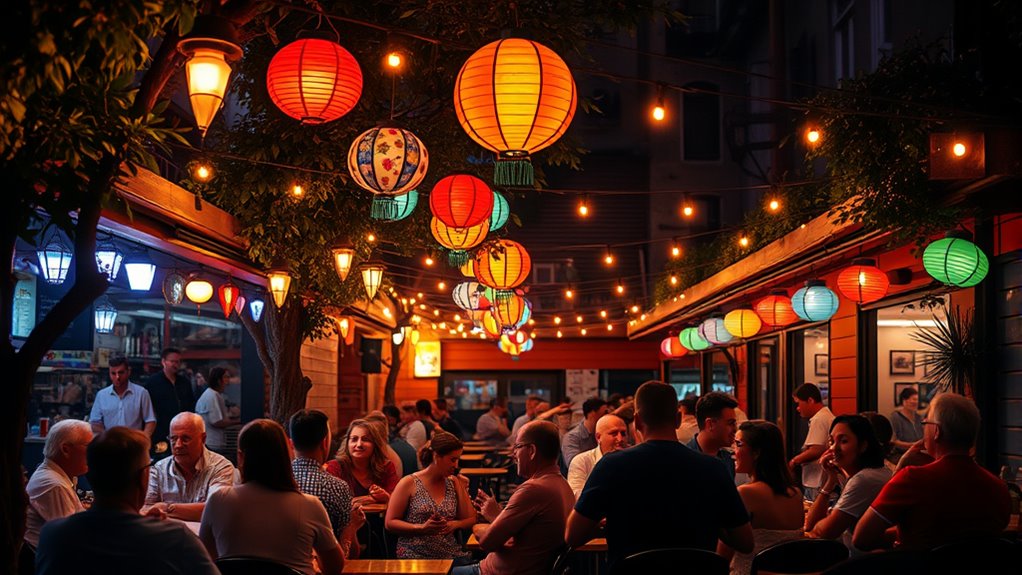

Environmental factors like lighting and music act as powerful attraction amplifiers by subtly shaping mood and social cues. Warm, soft lighting creates a cozy, inviting vibe that makes others more approachable, while calming music fosters intimacy and ease. Bright or harsh lighting can cause discomfort and barrier feelings. The right soundscape aligns with the space’s purpose, encouraging genuine interactions. To discover more about enhancing connection through environment, keep exploring how these elements influence social dynamics.
Key Takeaways
- Warm, soft lighting creates an inviting atmosphere that encourages approachability and relaxed social interactions.
- Music with calm melodies fosters intimacy and eases social engagement, enhancing attraction.
- Bright, harsh lighting can cause discomfort, reducing social openness and approachability.
- Upbeat, lively music energizes spaces, promoting enthusiasm and positive connections.
- Thoughtful environmental design, combining lighting and music, guides social cues and increases natural attraction.

Have you ever wondered how some people effortlessly draw others in and leave a lasting impression? The secret often lies in subtle environmental cues that influence your mood and behavior. When you step into a space, what you notice first aren’t just the objects or colors but the social cues and spatial design that shape your experience. These factors work together to create an atmosphere that either invites connection or discourages it. Understanding how they operate can help you become more aware of how environments influence attraction, making your interactions more natural and engaging. Effective environmental design can subtly guide social interactions and enhance your appeal.
Social cues, such as body language, eye contact, and even the way people move within a space, communicate volumes without a word spoken. When these cues are positive and welcoming, they signal openness and approachability, encouraging others to interact with confidence. Spatial design plays a pivotal role here, as it determines how easily people can connect. An open layout with comfortable distances between seating encourages conversation and makes individuals feel less confined or intimidated. Conversely, cramped or overly segmented spaces can create barriers, making social interactions awkward or uncomfortable. When you’re in a thoughtfully designed environment, you’re more likely to pick up on these social cues and respond naturally, which amplifies your attractiveness and approachability.
Lighting and music are powerful environmental factors that influence social cues and spatial design. Soft, warm lighting creates a cozy, inviting ambiance, signaling safety and comfort. It subtly encourages people to relax, smile, and engage more freely. Bright, harsh lighting, on the other hand, can have the opposite effect, making people feel exposed or tense. Music also plays a crucial role by setting the emotional tone of a space. Calm, melodic tunes can foster intimacy and ease, facilitating genuine connections. Upbeat music energizes the environment, making interactions lively and spontaneous. When lighting and music align with the purpose of a space, they reinforce the social cues that promote attraction and openness.
Frequently Asked Questions
How Do Seasonal Changes Affect Attraction Amplifiers?
Seasonal changes influence your attraction amplifiers by shifting your seasonal mood and outdoor ambiance. During warmer months, brighter days and lively outdoor settings boost your energy and openness, making social interactions more inviting. In contrast, colder or darker seasons dim your mood and outdoor appeal, reducing your desire to engage. Recognizing these shifts helps you adjust your environment, enhancing attraction factors like lighting and music to match the season and maintain connection.
Can Scent Influence the Effectiveness of Attraction Amplifiers?
You might find that scent perception plays a big role in boosting attraction amplifiers. Aromatherapy effects, like calming or energizing aromas, can enhance how environmental cues influence you. When you use appealing scents, they create a positive mood, making you more receptive to attractive stimuli. So, yes, scent can substantially influence the effectiveness of attraction amplifiers by shaping your emotional state and perception.
What Role Does Temperature Play in Environmental Attraction Factors?
Temperature plays a key role in environmental attraction factors by affecting your thermal comfort and temperature perception. When the temperature is just right, you feel more relaxed and approachable, making it easier to connect. If it’s too hot or cold, you might feel uncomfortable or distracted, reducing your openness to attraction. Maintaining a comfortable temperature helps create a welcoming environment, increasing the chances of positive interactions and attraction.
Are There Cultural Differences in Response to Lighting and Music?
You might think everyone responds the same to lighting and music, but cultural preferences shape sensory perceptions differently. These differences influence how you experience a space, making it feel welcoming or distant. By understanding cultural responses, you can craft environments that resonate emotionally, creating genuine connection. Recognizing these nuances helps you foster comfort and attraction, showing that environmental factors are powerful tools tailored to diverse cultural expressions.
How Quickly Can Environmental Adjustments Impact Attraction Levels?
Environmental adjustments can cause instant mood shifts, affecting attraction levels quickly. When you change ambient soundscapes or lighting, you might notice a difference in how you and others feel within moments. These subtle cues influence emotions and perceptions almost immediately, often within seconds to minutes. So, by tweaking environmental factors like music or lighting, you can effectively boost attraction and create a more inviting atmosphere almost instantly.
Conclusion
So, next time you walk into a space that instantly draws you in, remember how lighting and music quietly amplify its appeal—almost as if they were meant to be there. It’s no coincidence that these elements often work together, shaping your experience without you even realizing it. By understanding how attraction amplifiers function, you can create environments that naturally invite connection and comfort. Sometimes, the right ambiance just finds you, even when you least expect it.